Since 2018 I’ve been producing a podcast series titled “2100” which is an audio time capsule for the people of the year 2100 to better understand what it’s like living in the 21st century. Throughout those years I’ve interviewed hundreds of Philadelphians from Philly Jesus to former 76er Thaddeus Young to the local unhoused population – but I’ve never sunk my teeth into what the future for Philadelphia is in the year 2100.
The Drexel University Center for Public Policy debuted Drexel Policy Notes, titled “Climate Change and the Future of the North American City,” at the 2018 Ideas We Should Steal conference. Their analysis focused on the future of Philadelphia primarily through a climate change lens. In earnest there is no vision of the future that does not involve climate change, so let’s just focus on how sea level change will affect the future.
Delaware River Waterfront Will Be Pushed Back

If I owned Rivers Casino, I would invest heavily in flood insurance or have an exit strategy for their waterfront location by 2050 or 2060. According to Climate.Gov, since 1880, the global average sea level has risen 8–9 inches and in 2023, global average sea level set a new record high, 3.99 inches above 1993 levels.
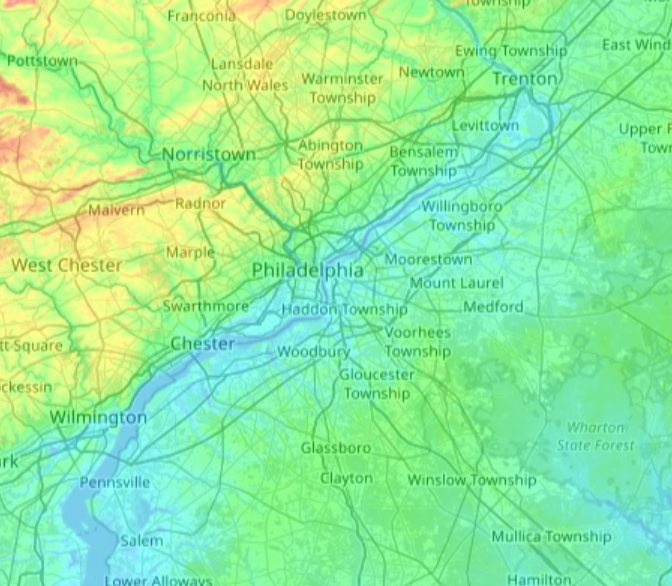
Sea levels are expected to rise about 7.2 feet by 2100, due to high greenhouse gas emissions and rapid ice sheet collapse. Under the circumstance that sea levels rose by 7.2 feet, all of Columbus Blvd would be underwater, as well as the greater perimeter of Philadelphia.
Places like Spruce Street Harbor Park, Cherry Street Pier, all the new luxury apartments along the Delaware, Curran Fromhold Correctional Facility, Pennypack Park, the Navy Yard, FDR Park, Bartram’s Gardens, and the Philadelphia Airport will all be under threat from sea level risings as they are all 10 feet above sea level or less.
How dramatically will the perimeter of the city be affected? Only time will tell, but I think it’s safe to say that anything east of I-95 will be underwater by 2100.
John Heinz Wildlife Refuge will have a lake inside of it and the Schuylkill River will envelop the Girard Point and Point Breeze Refinery Areas.
South Philly & River Wards In Danger, West & North Philly Sittin’ Pretty

Both South Philly and the River Wards sit between 3 to 10 meters above sea level, which will make them more susceptible to flooding and natural disasters. West Philly and North Philly sit on much higher elevations and will be safer places to live.
This discrepancy will cause socio-economic changes, expensive insurance in lower elevation, gentrification will be amplified in North and West Philly. Housing prices will rise and the demographics of these areas will shift, likely with strife as capital moves forcefully through this area.
The sea levels will shrink the South and East side of Philadelphia and then its borders will expand into Cheltenham, Yeadon, and Bala Cynwyd.
Power Balance Shift & New York-New Jersey Refugees
West Philly and North Philly will shift to being predominant centers of capital as South Philly and Fishtown become risky investments. Philadelphia is in a much better position than New Jersey and New York’s city centers which are much lower in sea level than Philly.

Manhattan, Jersey City, Hoboken, Secaucus, and the Bronx are essentially surrounded by water. When the sea levels rise, the perimeters of these low-sea level metropolitan areas will be forced to evacuate and seek new homes. Their nearest city-centers to flee to would be Boston or Philadelphia, Boston is a harbor town that will likely have more refugees fleeing than coming, Philadelphia on the other hand may be the most stable major American city.
Philadelphia will experience a shrinking perimeter, with outward western and northern expansion while functioning as a hub of refuge for people fleeing from low-sea level disasters.
The Jersey Shore will be non-existent in its current form and development along the coastline will be viewed as irresponsible after the boardwalks are washed away.
Low sea-level itself is not a kill shot, but the amplified weather, rising temperatures and sea level make for a deadly combination for much of the Northeast Corridor. Low sea levels plus warm weather plus natural disasters equals disasters and that’s the formula we will be fighting in the late 21st century.
America obviously had ample opportunities to reverse course on greenhouse gas emissions and polluting the Earth, our leaders have clearly chosen natural gas, greed, and AI instead, so Americans will have to now deal with the maximum repercussions of climate change.


Leave a Reply