(From Writer James Luckey)
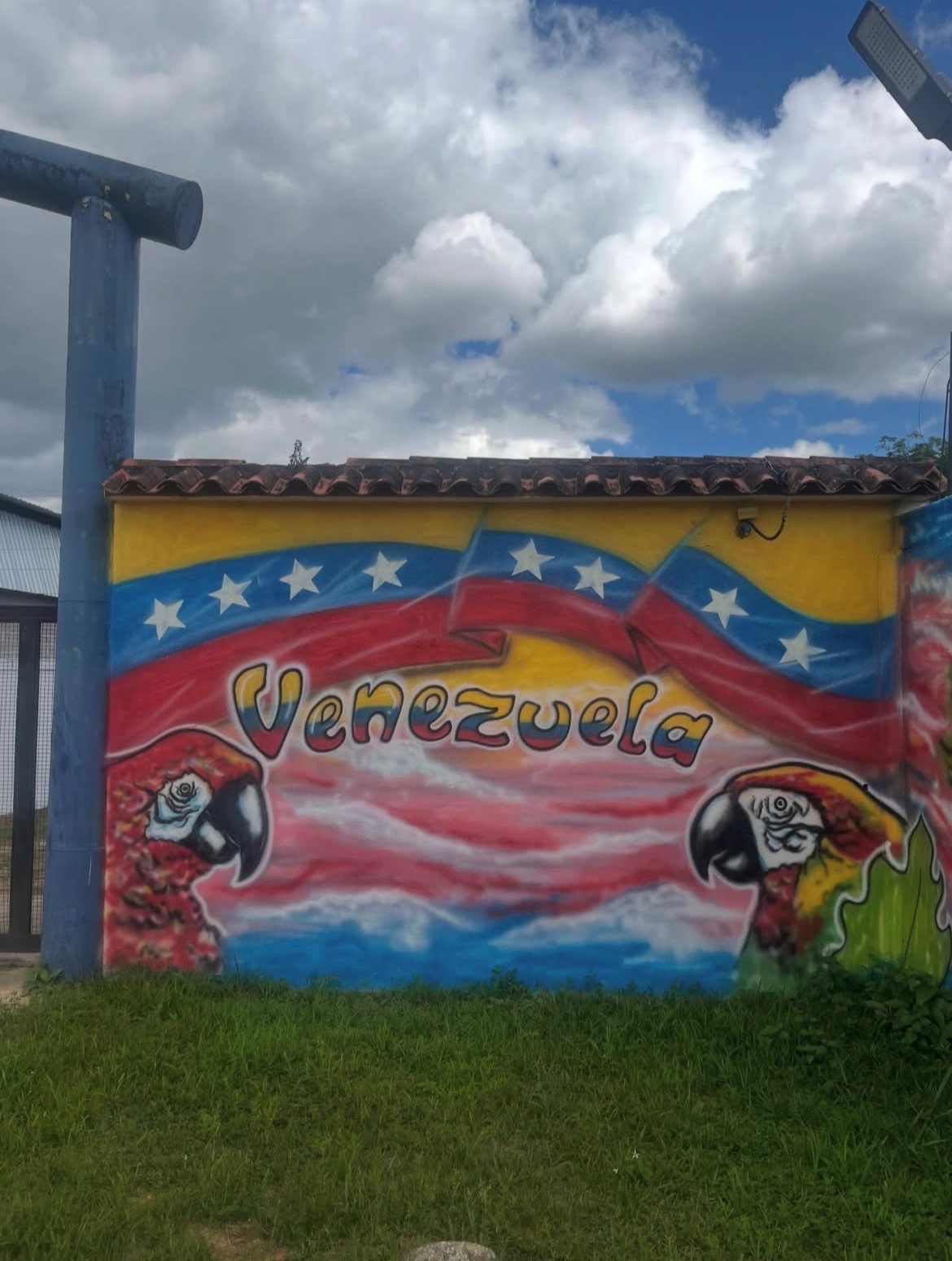
For me to get to Venezuela I had to travel through Brazil from the eastern border with Guyana to the northern border. I didn’t have much time left before I needed to head south to Manaus to return home for the family vacation my aunts and uncles had planned. The idea was I would travel to the border to find out my visa requirements and if not too elaborate and strenuous I may enter into Venezuela and spend a few days before making my final trip back home. Venezuela was the last country I had to go to in the Americas before being able to claim I had been to every country in the continental North and South. I got off the bus in Pacaraima around early afternoon and went directly to the supermarket to buy groceries. I didn’t know what the next few days would entail and if I was actually going into Venezuela or not. I didn’t even get my exit stamp from Brazil because I had not planned on leaving the country yet. I asked the moto taxi to bring me to the immigration office. I hopped on the back of the bike and after about twenty minutes of riding on the back roads of the Brazilian/ Venezuelan border we arrived in a town. for what I assumed the driver, who spoke only Portuguese, told me the immigration office was in. The only problem is as the driver drove off and I started to ask where the office was, I realized everyone spoke Spanish and there were no longer the green flags I was used to seeing around the town, but a yellow, red and blue one. I was in Venezuela. My biggest issue though was the immigration office I originally wanted to go to was actually all the way, twelve miles back the way I came.

I couldn’t make it back in time to the border that day before the immigration office closed so I had no choice but to get a hotel for the night and leave the next morning. After getting to my room I took a nap till evening. I awoke to a lively parking lot with groups of people drinking beer and vendors selling different types of food. I decided to walk around town to see what type of energy a small Venezuelan town gives off in the evening. I sat down at a women’s softball game and stayed a couple of innings till I decided to continue my exploration. That is when I stumbled upon a huge festival with a live concert and hundreds if not thousands of people dancing in the street. I stayed there for almost the entire night, dancing and drinking beer with the locals. Around midnight I headed back to my hotel and continued to party with the locals that were hanging in the parking lot of my hotel. In my travels I would see Venezuelans in different countries — I’ve even lived in a refugee camp with Venezuelans seeking asylum away from their motherland. They always told me how dangerous it was, but they never clarified what kind of danger they faced. For me, I just thought it was from street gangs and criminal violence, the same as all countries around the entire globe. Every person you meet wants to let you know how dangerous the place they are from is and how tough they are for living there. People are always armed with some sort of statistic to let you know how dangerous their neighborhood is. So when people told me that I thought it was the same as anywhere else. For now, at this point, my time in Venezuela was the opposite of what I had been used to hearing, but the oncoming days and weeks clarified for me exactly what the mass amounts of refugees had been running from.
The following morning I left my hotel and started to trek back to the border. It was twelve miles approximately, which meant I was probably going to be walking for the next 3 hours or so. This was a standard practice throughout all of my years backpacking: If the distance is walkable I am probably going to walk it. I made it to around the two mile mark into my journey when I reached a military checkpoint at the junction in the road. Fine, I had gone past this junction just the other day with no problem, when my driver hopped off of the back road for the main road and military checkpoints had become a common thing for me to see in pretty much every country in Latin America. I walked right through the checkpoint with no problem. A young military kid gave me a head nod as I walked by, I even asked for the distance back to the border and he told me with no problem. But as I started to get towards the end of the checkpoint, someone sitting outside of the shack on the side of the road told me to stop and to come towards him. He asked for my passport and told another soldier to bring me into the shack and search my belongings. For the first time in all of my travels I was being searched. In all of the misadventures and escapades I have been through, not once have I had to be subjected to a search. After I was searched I was told to sit in a chair for a brief moment. Still at this moment things did not seem too bad. I was even handed a cup of coffee.
Turn of Events
“That is when the men in Ski masks arrived, DGCIM, but for me at this time, they just seemed like any other military, the ski mask has become a fashion trend amongst all military personnel especially in Latin America, so to see them didn’t seem out of place. That all changed when I was told to go with them.”
They all got into the back of a Toyota Pickup truck and headed into the military base that was just a couple hundred feet to the east. From there they brought me into a small room where I met one of the captains in charge of the base. He stayed in the room as the DGCIM members once again went through my belongings. They attempted to make him strip out of my underwear, but he refused, only lifting his shirt and unbuckling his pants to show he was not hiding anything. They jokingly threw the word spy around but never seemed to be serious about it. They asked James if he was military because of what he had on what they called military style boots and they took concealing their identity and having total control of the situation very seriously, to the point of him feeling disgusted and slightly second hand embarrassment because they thought they seemed so tough but they came across so cowardly.

The military captain came in and out of the room periodically and around now is when he realized two things: 1. The Venezuelans were very incompetent and 2. I was not getting out of there that day”. As night fell the captain of the base escorted him out of the room and deeper into the base. He showed James an empty barbershop with a mattress on the ground. He told me that is where I would be sleeping for the night. The soldier said in the morning I would be sent back to the United States. He sat there and talked to the captain for a bit. He was a man who had completely bought in. He believed every single aspect of propaganda that was fed to him by the Venezuelan government. He even told James human rights were not being violated in their country. For that night, James slightly believed him. James thoyght about it and realized he did get himeself into this situation that is a bit parculiar and they hadn’t really done anything bad to him up to this point , a kind military lady even brought me dinner and told him “ you are lucky we picked you up. If it were the police, they wouldn’t feed you.” James and the female soldier talked for a while and she told him he would be completely safe and he actually wanted to talk to her more by the time she had left me.
The following morning they once again told me him he was going home that day. The military lady came back once more with food and they talked. When she left, he missed her again. I spent the entire morning talking with the soldiers on the base. For many of them, he was the first American they had ever seen. I stood in the doorway of the barbershop looking at all of the young men and women who had holes in their boots and mismatched uniforms and thought to himself: “If Trump and the United States invaded here, these kids are in trouble,”. They are entirely not prepared for that scale of possible imperialistic invasion. He watched as the young men and women put on military weaponry demonstrations for the older established men whose sole purpose in life is to do what the men above them tell them to do with the hopes one day they become that man giving the orders. Around noon a couple of military privates brought him back to the office where he was questioned and searched by the DGCIM, only this time the two agents were in plain clothes and unmasked. I asked them what happened to their masks and they looked at him with shock as if they were surprised he pieced together they were the same men from the day before.
Ciudad de Guyana
The agents brought me to the Santa Elena airport where a small propeller plane was waiting for us.The two broke apart and only one of the agents accompanied me on the plane with the pilot…. It was the one with the missing finger if any of you were wondering. To my understanding we were on the way to Caracas to go to a regular passenger plane for me to be deported back to the United States. It was my first time in a propeller plane and at that time I had not even been hand cuffed yet so I was actually enjoying myself a bit. We flew to the city of Guayana and that is where things started to shift for me. The plane landed on the tarmac and I was placed in handcuffs and handed over by one DGCIM agent to another. They told me it was “protocol” and “a process”. I knew as soon as I got off the plane I was not in Caracas. Four DGCIM agents had come to escort me out of the airport. I asked one “where are we?” He replied “Caracas” With a smile. As I realized this agent was willing to lie to me for whatever reason I looked to my left and saw the mural that read Guayana. So I knew for some reason they had escorted me to the City of Guayana in Venezuela. I felt my time had started to be wasted again, because why am I here? The banter I had with the military was no longer present. Anytime a DGCIM agent would talk to me I would just ignore him. At this point I didn’t give a damn what happened. I just wanted to be out in time for my family’s Christmas vacation. The agents escorted me through the empty streets of Guayana. For a visual understanding of what Guayana looked like imagine one of those empty western asian cities or one of those capitol cities that countries try to force down your throat but no one thinks of as a capitol.

We ended up at a police station. The agents brought me inside and sat me down in a room with my hands cuffed behind my back. They left me there for a few minutes while they discussed next steps because I don’t think any of them knew anything further than the last word their commander gave them. I rolled the cuffs from behind my back, under my legs and to the front of me. So when they came back I was sitting with my hands in a pyramid position. They brought me into another room where they started to interrogate me. There were two agents who spoke English but one of them was assigned to be my translator while the other was assigned to simply interrogate me. The translator was a child, no older than twenty. The Interrogator would ask me questions in broken English while the translator would repeat what the translator said in even worse English. I would respond in Spanish, when there was a word I didn’t know I asked the translator in English to translate it in Spanish. The interrogator wanted to know how I arrived in Venezuela, how I financed my travels and all these other things about my adventures in Latin America. I answered his questions at least a half dozen times.
Interrogator:
What are you doing here in Venezuela?
Translator
He wants to know wh-
I never broke eye contact with the Interrogator and interrupt the translator.
James
I understand what he wants.
Now talking to the Interrogator.
James
I was on my way to the immigration office to try and get visa requirements for Venezuela. I was brought over by a Brazilian taxi driver a few days ago…
I ran through my entire time in Venezuela before being detained. Behind the desk was a man trying to dictate what the three of us were saying, but between the repetition of the questions, the broken English of the Interrogator, the broken and unnecessary English of the “translator”, my broken Spanish, and the fact that he typed 10 words a minute and with his index fingers, the agent dictating the conversation was having trouble to say the least. It took three different morons to try and dictate our conversation. Even the Interrogator tried himself. I was aggravated but I could not help but to laugh. Eventually the interrogator got to the point of my detainment.
Interrogator
We think you are a spy.
James
Are you kidding me?
Interrogator
Why do you have military boots?
Translator
He wants to know why you-
James
I understand him. He is speaking English.
Interrogator
The United States Military gave you these boots.
James
No they didn’t.
Interrogator
You are a spy.
James
No I am not.
Interrogator
You are bullshiting me man. Don’t bullshit me.
James
You can go fuck yourself. I am not a spy.
I look at the translator.
James
And you too, little boy.
Translator
Ayy, why do you have to be mean? Please I have not called you any names.
James
Are you kidding me? You all are wasting my time with this shit. Nobody has time for this. You have agents lying to me about where we are. You got me hand cuffed. I am not a spy.
Interrogator
I don’t believe you. I think you are a spy and you bullshit me.
James
I don’t give a fuck what you think.
Translator
Please you have to show us respect. We are the police. It is a process here to see if you are telling the truth.
I looked at the translator as if there were something mentally wrong with him. Quickly I realized this kid just wanted to show his higher ups that he was respectable and could get that unwarranted respect from a detained person. He was an agent in the making. Our repetitive conversation went on for about a half hour till someone came into the room and told everyone that I needed to go. Me, the translator, interrogator, and a DGCIM agent with an assault rifle headed outside and into a vehicle. The aggression from the DGCIM agents slowly escalated from the time I landed in Guayana till this point. Little did I know it was going to get much worse.
Welcome to Caracas
They drove me back to the airport — the translator and DGCIM agent escorted me through to the Tarmac. There, a private jet with the engine running waited for us. The translator held my bag with my belongings falling out while the agent brought me on the plane. The translator followed shortly behind. In the plane were a family of three — mother, son and grandmother. DGCIM had commandeered this wealthy family’s private jet to escort me to my next destination, which obviously was Caracas, but when I asked the translator, he refused to tell me. He was set on having some sort of control in my situation. I was handcuffed and in the control of the agent with the assault rifle, but this kid, this “translator”, was essentially just along for the ride. I paid him no mind and aimed to hurt his feelings any chance I got. I told him what he is doing is wrong and working for DGCIM was a waste of his youth and a waste of a life. He was a boy who could speak both English and Spanish. He could be an asset to so many other organizations in Venezuela. We landed in a private plane airport in Caracas and the two agents escorted me to the valet area where we waited for a car that was already supposed to be there. I told the translator I was using the bathroom. He said no and to wait there for the car. He didn’t care if I used the bathroom or not, he just said no so he could have control over the situation. I just walked back into the airport without his permission. The DGCIM agent with the gun told me to stop. I turned to him and eyeballed him up and down and continued to walk into the bathroom. The DGCIM agent stood there, almost confused by my noncompliance. As I was at the urinal in the bathroom, both the agent and translator came in and used the urinals to my left and to my right. I went to wash my hands but the translator told me no. To appease the kid I listened to him. What a strange thing to want to be in control of. The three of us went back outside. The translator wanted me to stand in the corner, like I myself was a child. I ignored him and walked around the sidewalk analyzing my handcuffs and antagonizing my capturers. The translator was demanding I do as I was told, even trying to get the DGCIM agent involved, but he was disinterested in participating in the kid’s arbitrary demands. He was more interested in what was on TikTok. Eventually our transportation did come. We got in and drove through the rainy Caracas streets. I sat and thought about my translator and how his entire self purpose is to impress the older men in his life. It is something many, if not all, young men can feel. It is something even I can feel at 28. I told him I was sorry. He nodded and said thank you. All he wanted was respect. I asked the two if it were their first time in their nation’s capital. They told me yes. I said “ You are welcome. You would have never had this opportunity without me.”

Headquarters
After an hour ride through Caracas we reached an area made up of different government buildings. We turned into a parking garage. The DGCIM escorted me upstairs into an office. I didn’t know at the time, but this was the headquarters for the DGCIM. They put me through a medical evaluation and once again tried to strip me out of my clothes into complete nudity. I refused to take my underwear off. They already knew I wasn’t concealing anything and this entire process was to see how well I would conform and submit to them. They told me I would be forcefully stripped out of my clothes. I did not care and told them to do what they had to do. The commander was notified and said whatever, just bring him back to the front desk. The translator and DGCIM agent who had escorted me to Caracas left and I sat there waiting for whatever was to happen next. DGCIM brought me through a hall with office cubicles filled with Venezuelan families. Mothers, fathers, children all sat, slept and walked around here. To this day I still have no idea what they were doing there. On the other side of this area was a large room with seats in the middle. The agents sat me in a chair facing the wall, like a child on punishment. As soon as I sat down I turned to face the room. I didn’t appreciate the arbitrary demasculanization. I observed a prisoner being escorted in by other agents with soaking wet skin and dry clothing, he had been brought back from showering. He was sitting in a chair on the other side of the room facing the wall. I watched him rock back and forth freezing in the air conditioned room and holding his head as he focused on the wall like a child without his blanket trying to ignore the monsters around him. Soon after another man, fresh from the shower, was brought in to face the wall. He kept his composure better, but still abided by the agent’s demands. Shortly after, I was moved to a hallway where they took my clothes and gave me a blue prison uniform and flip-flops. I still held onto the idea that if I could get out of this situation by the 12th or 13th I could still make it home for the family vacation and no one would have to find out that I was captured by the Venezuelans. I was sat in a solitary confinement cell, with a concrete slab for a bed. There was a camera in there to evaluate and analyze everything I did and there was a toilet that sat right in its peripheral. There were no glimpses of the outside world, no way to know what time it was and no way to know what day it was or how many days had passed besides your internal clock.
Chained
After sitting on the concrete slab for what I presume was overnight and into my next day I started to ask the agents walking by how much longer did I have to wait in there. Every time I would ask they ignored me or heckled me. The other inmates who were brought back and forth past my cell would bend down to look through the window at what was probably a very rare American sighting. I grew fed up with waiting and started to bang on my door demanding answers to why I have been incarcerated and to what will be made of me. My ruckus rang out through the entire jail and every time I was told to stop I would bang louder, I would scream louder and when my hands hurt I would use my feet to kick the door. Eventually my door slammed open and 8 guards came rushing in to confront me. I punched the first one in the face. And another guard grabbed my arm. I pulled him closer to me and started to punch him with my other hand and another guard grabbed my other arm. The other six were hitting me in the back of my head, my back and my sides. They used similar gloves to what a motorcycle rider would use with carbon fiber knuckles. I pulled the two guards closer to me and screamed at them “You thought it was going to be easy?” Eventually another agent had swept my legs and they kicked and stomped on me as I was on the ground. Other agents had come along with cuffs and restraints and they were able to turn me over. Another officer was able to put his knee on my head and hold it between the floor. They dragged me back into my cell. The agents left and all that was left was their commander on duty who started to speak to me in English. He told me that I had made it hard on myself and that he was going to get to the bottom of whether I was a spy or not. I told him he and his government had wrongfully detained me and asked him if he felt like a piece of shit for being a part of this regime. He told me it was okay because the United States would have done the same thing to a Venezuelan. He didn’t even see the hypocrisy of this statement. This was a common thing I had become accustomed to hearing in my travels. It is something you can hear foreign leaders who oppose the United States saying all of the time and it was something I was going to hear over and over again while in Venezuela. The only problem is how can you as a country, a government, a person, use that to justify your actions. Do you hate what the United States stands for or do you want to be like the United States. He ended our conversation by saying he lived in the United States as a child in Tennessee. He told me he faced racism there and he knows what it feels like to face racism, I completely believe him. Living in Tennessee is hard enough for an American born latino let alone one that doesn’t speak English and was born in Latin America. He went on to give me the old fallacy of there not being any racism in Venezuela — something that I had been hearing from non-black Latinos since I stepped foot in Latin America three years ago. I’ve been to every country in Latin America and if you ask the darker population in those countries they would say their most definitely is racism in their country. What made it slightly funny though was when he left, an agent who had been antagonizing me for my time there came over and called me nigger four times in a row.
I was in my cell trying to get comfortable in my restraints for the next couple of hours, but nothing worked. After another couple of hours I succumbed to the pain in my shoulders and had what I think was a panic attack — something that had never happened to me before. My body heated up significantly in a short period of time and I had a cold sweat that felt like I had been exercising outside in the cold. My heart rate skyrocketed and I felt weakened. My stomach felt like I could throw up at anytime. I pleaded for the guards to get me out of the restraints but they ignored me. What helped me was sitting down on the toilet with my head between my legs. Anytime I would stand up though the pain would return. At what I presume to be that night I realized I couldn’t be in the restraints anymore and started to analyze my bondages. I noticed there was a knot on the rope that held my chains to my waist. I started to untie it with my hands behind my back. Eventually, after hours of figuring out how I was restrained and how to contort my body in different ways to get out and how to do it while not raising an alarm to the person watching me on the camera in the cell, I got out and felt a moment of relief. Not long after the guards came back in and we fought again. This repeated over a span of what I think was four days. I told them no matter what restraints they put me in I would get out of them eventually. The commander said “ Good, it will just be more practice for my men” I told him to go fuck himself.
I was chained for what felt like four days, but because of the lack of knowledge of time, I could not say for sure. I was never fed, I was never given water. I felt the outline of the organs in my body. My kidneys felt like someone had stuck pins and needles in them, my eyes, like they had sand behind them and my lips like sun dried fish scales. Eventually an agent rushed into my cell with my clothes in his hands. He said to get dressed and that I was going home. At first I sat in my cell happy. I thought to myself — just in time for the family vacation. Quickly after, I realized it probably wasn’t true. These agents, they lie. Anything they tell you to be true, to be real, is actually false, the opposite. Half a day or so later I was escorted out of my cell and back to the lobby of the headquarters. Three DGCIM agents escorted me to an office on the other side of the building, all three in plain clothes. Two carried assault rifles, the other one carried my journal and notebook. The agents with rifles were ‘run of the mill’ moronic yes men. The third man though, was interesting, he looked like a Latino Nazi. He had a Nazi haircut, clean shaven face, Hugo Boss glasses and an extremely feminine entitled attitude. He was short tempered and most notably: clean. He gave an attitude like he couldn’t be bothered with the truth if it didn’t agree with his agenda.
I was sat in an office and interrogated by the Latino Nazi about my notes in my book. He wanted to know what the words were and why I had writen them. I asked him how long until I was sent home. He told me he didn’t know. After our short conversation the Nazi told me I would be getting blindfolded. I refused. If these men were going to harm me, move me or anything I wanted to see what was going on. The Nazi didn’t agree with that and he ordered the men to put the mask on me. I tried hard to fight it but my entire body was chained at this time. One officer put me in a chokehold and the other put the mask on me. I was carried out by the men and thrown in the back of a car. The Nazi sat in the passenger seat and the two men sat beside me in the back.
Welcome to the Rodeo
After what felt like a twenty minute ride, The car stopped and the men dragged me out of it. They walked faster than my shackled ankles could manage. The sun was hot and I was sure I would be killed. I was brought into a room and placed on my knees. They unmasked me and sat me in a chair. Another agent came in and shaved my head. The entire fiasco was to humiliate and psychologically terrorize me. Once again I was made to strip and put on a blue uniform. They handed me a pair of cheap imitation crocs. They sat me in front of a desk surrounded by officials and agents from a new group I was unfamiliar with, SESMAS. In walked more agents from this new organization and an older prisoner who was handcuffed and masked up. They sat him in front of me and unmasked him. He introduced himself to me. His name was Javi and he was going to be my translator for the majority of my time in this new prison they had brought me to.
After asking me the typical questions all of the other DGCIM agents asked me, the Nazi brought out my notebook and journal and had Javi read it out loud and translate it into Spanish for him. The Nazi asked me about my Aunt Abbie who I had been texting before being detained almost a week prior. He went back and forth from my phone to my journal. He would have Javi ask me questions about the contents of my journal and he grew more and more frustrated when he realized all it consisted of was emotional anecdotals of leaving home and fishing in Alaska, sexcapades with previous women I had dated, cultural analyses on the countries I have been to, and names of countries I wanted to go to on every continent. I enjoyed having Javi as my translator immediately. We would banter and joke, causing aggravation for the Nazi because the officials would laugh at my answers to the questions instead of admiring him for having control of the situation. The Nazi ran across a list of names in my phone and asked me what it was. I told Javi to tell him it is a list of women I had slept with, something I could have said on my own but I knew it would have been funnier to hear the old man say it. When he translated, the officials burst into laughter and the Nazi grew so frustrated he just yelled for the SESMAS agents to take me away. I asked him if we would be talking again. He told me yes. I replied “today?” He said “in a bit.” The agents put the mask on me and escorted me through the prison grounds into a cell block. I was placed inside of a cell and unmasked where I met my cellmate for the remainder of my time being imprisoned.
He looked rough. He was covered in scars and missing half of his teeth. He was short and looked like if Jon Bernthal were cast as wolverine. He reached out and shook my hand. His name was Vakeny Diaz. He asked me what happened. I told him I had been abducted off of the street by the military and now I am here. I told him of my time in DGCIM and he had a similar story of being there. He told me a similar area existed on the top floor of B building, solely referred to as the fourth floor, where they chain you up for months on end with your arms behind your back only to unshackle you for your meals. He had experienced that himself. There were men there who were being force fed nutrients through a tube up the nose and being relieved by catheters up their dicks. I asked what he was locked away for and for how long. He told me he was there for a year and four months. He was there for the same reason every man in that prison was. We were all political prisoners taken off the street or from our homes and for the most part the entire prison was innocent. Just average joes, bus drivers, delivery boys and laborers. Also in this prison were Generals who were accused of going against Maduro’s regime and political adversaries to Maduro’s United Socialist Party.
Vakeny introduced me to Said, a Lebanese man who as a youth moved to Venezuela with his family. He moved to Peru after falling in love with his wife Mila. He was captured while on vacation along the Venezuelan- Colombian border. Valkeny himself was captured while crossing that border on his way to visit family in Margarita, an island off of Venezuela’s main land. Juan, Said’s cell mate claimed to be a garbage man, pulled off of the street. In the cell next to them was Angel and Francisco who arrived around the same time. Both also pulled off of the street. In the cell next to mine was Alvedo and Lenny and two cells down from Said and Juan were Magneto and Senior Santos. Everyone was really supportive of each other in there. That is something that never changed.
Our cell was dark and made of weak, non-reinforced concrete that was falling apart. Our beds were concrete bunks with pissy stained mattresses, with no sheets, and the idea of having a pillow was so implausible that I didn’t even bother to think about one. At night ticks would come out of the holes in the concrete in our bunks. Bedbugs would come out of our mattress. Almost every morning I would have to clean my mattress with bleach and chlorine and let it dry, in an effort to kill these bugs. No wonder our heads were shaved. If they weren’t, there would have been a lice infestation in the prison. Our shower was a plastic pipe over a hole in the floor that also acted as our toilet. To flush we used a jug and dumped it down the pipe. We only had running water two times a day to shower. Every day SESMAS would replace our jugs for drinking water. At night it got so cold I had to use my towel as a blanket. I had no socks, no change of clothes and most aggravatingly, no idea when I was going to be getting out of there. I didn’t care that I was technically in a better situation because I was no longer at the DGCIM prison where I slept on a slab with my hands chained behind my back. I didn’t care that I was actually being fed and had water, because to me I was still in a prison and my freedom was being played with by an incompetent regime. Most importantly my time was being wasted and no one I knew, nor my government knew I was there.
Yes and No Questions Only
Every morning the guards would wake us up by banging on the doors and yelling at us for our ID numbers. For me it would be my passport number, which I don’t know by heart. So when the guards would ask me for my number I would just say “no se” or I don’t know. Afterwards comes breakfast and coffee and prescriptions for anyone who has a need for them. Breakfast is the same as dinner, potato cake and cheese. Around 10:00 AM the guards came to get me from my cell. I thought I was going to talk to the Nazi again. Instead I was escorted into a white room on the second floor of another building. I was placed into a chair and told to wait. After five minutes Javier was brought into the room. We shook hands and waited for the guards to tell us what was going on. A man in a suit two sizes too small for him came in and pulled out this giant machine that connected to a laptop. Javi said “oh, they are going to put you under a lie detector test. Don’t worry we all had to do it”. We sat there for about an hour, but apparently the machine was having issues working, so me and Javi were sent back to our cells till the lie detector test proctor could fix his equipment. After two hours we were brought back to the room and for the next 16 hours I was placed in a chair and had to say yes or no to questions that were repeated hundreds of times. The proctor told me that I had to lie about two things in my life and lie about two pedestrian things to make the machine register what my body is doing when I lie. For my lies, the proctor would ask in various different ways if I had missed my father, who had passed away. I would have to lie and say No — I don’t miss him. He would ask me if there is a past lover in my life that I missed. I would have to say no, even if I did. I would have to say no to my shirt being blue, although it was blue. I would have to say no to the wall being white, even though it was. The questions I was supposed to tell the truth to were the ones all relating to my detention in Venezuela. Are you in Venezuela to destabilize the country or economy? Are you affiliated with any American intelligence agencies? Are you in Venezuela to enact terrorism on the nation? Have you ever received money from any intelligence agencies? Are you in partnership with any Venezuelan political advisors?
These questions were asked over and over again over the span of 16 hours. As time went on the proctor became more and more frustrated. Apparently my results came back inconclusive every single time. In other words my lies and my truths were registering the same way there was no difference in my vitals. I at first found it funny. I was beating the lie detector test and I actually wasn’t lying at all. In between rounds of questions, the proctor would leave in frustration to cool off, eat lunch or talk to the Director of the prison. When he would leave me and Javi would talk. He told me his story:
Javi was at one time a very important figure in Venezuelan politics. He wasn’t a politician, but he was the one who would administer deals between different Venezuelan political adversaries. On paper and in his day job Javi was an import/exporter, but he was moonlighting as one of Maduro’s top negotiators. One day Maduro tasked Javi with striking up a deal with the Colombian terrorist group the FARC. Javi had worked with them in the past. He bought cars from them through his import/exporting business and Maduro trusted that his rapport with the FARC could be used to negotiate a deal between the two parties. Javi never told me what the deal was, but seeing how Maduro is a big time well known drug trafficker, I imagine it had something to do with the price of cocaine. Unfortunately for Javi the deal didn’t go In Maduro’s favor and Maduro sentenced him to prison with an unspecified amount of time. Javi wasn’t sent to prison for participating in deals between the Venezuelan regime and a well known terrorist organization, but because it didn’t go in the regime’s favor.
For being my translator Javi was promised cigarettes. Throughout the entire day Javi never got his cigarettes. He said the Director of the prison was his friend. I told him it wasn’t possible for the Director to be his friend and imprison him at the same time. He said the Director was crazy and insisted that they were friends.
The proctor came back one final time and told us that we were done for the day and that we would be coming back tomorrow to do the same exact thing.
The next day in the morning after breakfast it was back to the lie detector test. Only now we were in a different room. One with a camera in it. When Javi came in I asked him if he had gotten his cigarettes. He told me no. I said “ Fuck em” we don’t do anything till Javi got his cigarettes, but Javi insisted we start the test. We faced the same problems as the day before. My results were coming back not to the liking of the proctor. I don’t know if it was because I was telling the truth of me not being a foreign invader and he wanted it to come back as me lying, but multiple times the proctor left in frustration. Which left time for me and Javi to talk more.
Javi was a Muslim originally from the middle east. He carried a tasbih and would fidget with it as he translated the proctor’s questions. He moved to Venezuela as a kid and spoke several languages. He raised his family there in Venezuela and although they had escaped to Holland, Javi said when he gets out he isn’t leaving Venezuela. He is going to his house and maybe he will rest, start smoking weed and enjoy the remainder of his time on earth.
After a seemingly calm eight hours things took a turn for the worst. Strings of questions went on for longer periods of time without stopping. I was told to concentrate harder on my lies and told to stare at a point on the wall without moving while the test commenced. When the periods of questions would halt, Javi would grow frustrated because he had not gotten his cigarettes and one of the agents that had the code name ‘Chino’ was giving him attitude about it. I was completely on Javi’s side. Fuck these agents. They were all children no older than 20 years old anyway. I myself was psychologically drained. Ending every period of questioning felt like stepping off of a treadmill. I was on the verge of snapping and pushing the polygraph clean off of the table. Hundreds of times I was asked if I were a spy, a terrorist, a foreign agitator, there to disrupt the government. Hundreds of times I was told to say No, I don’t love my family members, my deceased mother, my deceased father. I had to say No when the proctor asked me if I cherish any romantic or sensual relationships in my life, over and over again.
And then: it stopped. Apparently the proctor got the results he wanted and they were to the satisfaction of the director. The SESMAS guards brought me and Javi back to our cells.
You are Guilty Until Proven Innocent
The following day I was once again taken out of my cell and brought into a different room. This was a bit different though — there were women, unmasked women. I had met a woman two days prior, the prison psychologist. She wore a ski mask like all of the agents in the prison. She was sent by the director to evaluate me, because they had heard I had been a problem at the DGCIM headquarters. I asked her: how could she be a psychiatrist, a doctor of mental health and work in a prison that’s whole purpose is to lock away innocent men? How could you work for an institution that is the direct problem for hundreds of men’s mental health? How can you ask a man about his problems when you work for the organization causing his biggest problem?
These women I met that day were different though, or at least I thought they were at first. They wore regular clothes, they didn’t have ski masks. They seemed to be from some sort of third party organization and were accompanied by DGCIM agents who wanted me to sign documents that I didn’t quite understand or trust. I was tired of being lied to by these people and I thought it was odd that they wanted me to sign paperwork without Javi to translate it for me. I refused to sign my name or put my fingerprint on anything till they brought Javi in to explain it to me. They demanded I sign the paperwork, even stating that the paperwork was to help me get out of prison faster. Which was a lie, but I stood my ground till I could have Javi come in and translate it for me. I already knew what the paperwork said. I just wanted to talk shit with Javi for a bit and see if he got his cigarettes. Eventually they brought Javi in to tell me what the paperwork said. He confirmed what I already suspected. The paperwork wasn’t going to change my situation. All it was, was another arbitrary document used to legitimize my detainment to a regime that didn’t care if my detention was legitimate or not. I asked Javi if I should sign it. He told me he could not make that decision for me in good conscience. Which makes sense. No one knows what they would use my signature or lack of signature to prove. I sat there and thought for a moment. I asked Javi if he had got his cigarettes from last night. He told me no. “Ok Javi, tell them I will sign whatever they need, but I want four things.”
- Javi gets his cigarettes you promised him
- I get an opportunity to call my country and let them know I am here
- I get a fresh uniform and underwear
- I get to use a real bathroom.
The agents agreed to my terms. The SESMAS guards brought Javi back to his cell. This would be the last time we see each other face to face. DGCIM had me sign a couple of papers and then the women had me stamp my fingerprints on various papers. I looked into the eyes of one of the women and she had a look of pity for me. That is when I realized these damn agents had lied to me again. I was masked and brought back to my cell block. I was so angry, so furious that they had lied to me again that I attacked them while blindfolded. The guards beat me in front of the other prisoners and threw me into my cell. Vakeny asked me over and over again what was going on, but I was to angry to even speak.
The next day I was brought out of my cell and transported to an office room with a laptop in front of it. Another prisoner was brought in and sat in the chair next to me. They told me he was to be my translator but conflictingly we were not allowed to talk to each other. A DGCIM appointed judge came onto the screen of the laptop. He was wearing a white Prada puffer vest and had a spray tan. Our lawyer was also DGCIM appointed. He was sloppy with stains on his shirt and wore a blazer with black jeans like one of those public defenders that would tell you to take the 10 years probation for a common traffic violation because he can’t get you anything better. The judge talked for about 20 minutes and the agents in my room did not allow my translator to tell me anything. I wasn’t sure why he was there to begin with besides to appease the incompetent bureaucratic ambitions of the men in charge. I didn’t really need him there anyway. I understood enough of what the judge was saying to know I was not going to be charged with being a spy but instead I was going to be investigated for terrorism and that I was to wait in my cell for an undisclosed amount of time till I was to either be freed or to face trial. This is basically the charge that all the men in the prison were being accused of if they were not already sentenced to life in prison.
The “hearing” had ended and the agents were trying to separate me and my new translator. I told one of them to “ calm down you fat child”. I don’t even have any information yet. My translator basically confirmed what I had already known. As the child agents dragged my translator out of the room he said very indifferently “l know right, it’s messed up what they do, it’s like a legal kidnapping. Just wait it out and I’ll see you when we get out of here.” Then he left. I was brought back to my cell and just sat there processing what just happened. I thought to myself: if they are going to make my life hard I am going to make their life hell.
Cellblock A1
Every night after dinner on my cell block, senior Edgar, who was a Panamanian academic, probably the smartest man on our cell block and the Prison Preacher of cell block A, would give a sermon followed by any other prisoners that wanted to preach the gospel alongside Senior Edgar. Edgar was a sweet old man around five foot, but very strong. He could do thirty pull ups in a row. After Senior Edgar’s sermon we would chant and sing songs of freedom. Some men participated, other men didn’t. We would wrap things up with nightly news where we would tell of what we heard was going on, on the outside. One night, about two weeks into my time there I started to talk with Raphael Tudares, one of the main sources of our information. We would yell back and forth to each other because we never were able to see each other face to face. He was the one that relayed any information I needed back and forth to the other side of the cell block. You may know Raphael. He is the son-in-law of Maduro’s biggest political advisor in Venezuela, Edmundo Gonzalez. It is widely believed that Gonzalez is the rightful president of Venezuela, but in their 2024 election Maduro used his power to tamper with the outcome, making him the winner. To dodge political persecution Gonzalez ‘up and left’ Venezuela for Spain. Behind in his home country of Venezuela was his family, including his daughter and her husband Raphael Tudares. Some time after the election a site went live claiming and showing information indicating Maduro stole the election. Raphael was accused of funding this site and convicted of crimes against the state. What did they use for proof? A photocopier, printer and fax machine in Tudare’s home. They claimed this three in one machine was proof enough for Raphael’s sentencing of 30 years, basically submitting Raph to a probable life sentence. This sentencing also meant his uniform was different from the rest of ours — he wore a yellow jumpsuit instead of blue.
I was also introduced to a foreign national who because of the nature of our interactions I won’t be naming. For now we will call him Spotlight: One evening I heard a man speaking very clear English from down the hall. I rose from my bunk and climbed up top to listen. I could make out some sort of accent, but because it was so far away I could not make out where. I shouted “EHH, GUY SPEAKING ENGLISH, WHERE ARE YOU FROM” he screamed back where he was from. We talked a bit about how we ended up there. It felt good to know that there was another fluent English speaker on the cell block. The next night Spotlight had a lot of questions for me. I was the freshest face in the prison which meant I had the most up to date news from the outside. He asked me what publications I follow and what sort of news I pay attention to. He asked me if I had heard of this prison on the news prior to arriving in Venezuela. He was surprised that I told him “No, I don’t think many people know what is going on here in this prison” most of the news about Venezuela at the time of my detention was to my knowledge about the mass amounts of refugees in foreign countries. Spotlight then asked me if I had ever heard of him. He said his name should ring bells if I actually did pay attention to world news. “No, I can’t recall ever hearing about you.” He told me his story of how he was captured similarly to me by a checkpoint. He was able to text his father and friends before having his phone taken from him. He said his father was going to soccer stadiums around the world and advocating for his release. He told me he was famous. I had never heard of him, but news is a bubble and it is possible the story just didn’t penetrate my personal news bubble. Spotlight was a nice guy. He even sent me a fighter-jet figure he had made out of soap.
My Cellmate, Vakeny, was the most known person in the prison. All of the prisoners looked at him as a friend. His nickname was Chicho and every one in the prison would yell his nickname out as they passed by our cellblock. He was very clean. I never had to worry about a dirty cell. Chicho was annoying and never knew how to shut the hell up. Which can seem bad, but is actually a very good thing, when you are in the most lonely place. I couldn’t have asked for a better cellmate. He was crazy, but in that really funny way. When he would sleep he would yell out his own nickname “CHICHO, CHICHO, CHICO” like a dog would bark when they have a nightmare. He taught me all of the prison workouts and looked out for me when I got sick. Chicho had been shot 10 times, the scar on his neck came from the blade of a machete. He had lived a hard life in Colombia. Police had busted out half of his teeth and placed him in prison for ten years. Chicho became a free man and after having a baby in Colombia he traveled back to Venezuela to see his mother and father in his hometown of Margarita to try and set up life there for his new family. DGCIM agents captured him at the border of Colombia and charged him with terrorism without any proof of involvement. He hasn’t talked to or contacted his family ever since. That was about a year and a half ago.
Each one Teach One
One evening Chicho was swiping through a book after dinner while I was laying in my bunk. The sound of the papers turning told me he wasn’t reading. Intuition told me he probably didn’t have the capability to read. I got out of my bunk and looked at Vakeny while he swiped through the book. He was looking at the photos. I asked him if he could make out what was on the pages. He was completely honest with me and told me no. I asked him if he wanted me to help him learn how to read and he humbly told me yes. I thought to myself how hard could it be? I know how to pronounce and read Spanish and I wouldn’t have to teach Vakeny what the words meant because he was 39 years old which means he had 39 years of word comprehension. All I have to do is teach him how to make the sounds and then he would understand what those sounds meant.
I tried to start by having him sound out words in a book, but he couldn’t do it. He was trying to copy the things I was saying, instead of reading what was on the paper. Chicho didn’t know what sounds the different letter combinations made to make up words. So I took it a step back and started to teach him letter combinations by using a nail Chicho hid in his mattress to carve the alphabet on the wall and additionally carving the vowels on the side. This method didn’t work either. It was too advanced. Chicho didn’t even know what any of the letters were besides the ones that made up his name. So I started to teach him the alphabet. We worked on it for hours and when I was too tired to continue I lay in my bunk and listened to him practice while I tried to fall asleep. Instead of sleeping though, I cried. I realized Vakeny had been arrested and signed paperwork without even having the capability to read what he was actually signing. Whatever agents who arrested him could have said anything — His paperwork could have said anything and Chicho would have never known.
Me and Chicho got into a rhythm practicing. We practiced every night after prayer. To the point they started to call me the professor on my cell block. I think in my time there in prison I was able to get Chicho to about a 6 year old reading level. He was able to read through the entirety of the rules and regulations of the prison they had posted on the back of all of our cell doors with minimal assistance. I never felt a type of pride like that. I helped this man learn something that he can now use when he gets out of prison. Something that he could impress his family with. Maybe land a new job, or simply just educate himself further.
I’m Angry and I Ain’t got Nothing to Lose
I hated the SESMAS agents. They were broken up into teams of two. One agent is usually over the age of thirty. The other, some kid, usually between eighteen and twenty. These agents were there just to do the higher ups bidding. Feed us when it was time to feed us. Give people their medications when it was time to give them their medication. Beat us when it was time to beat us. They all wore ski masks and used code names from the guards all the way up to the Director of the prison, so that prisoners released wouldn’t be able to use the guards real names when they described the atrocities that they do in there. The majority of the guards were children. Only eighteen or nineteen years old. Some of them, so evil and cruel. A guard by the code name Soleta was my least favorite. He was cruel like the other guards, but that wasn’t the issue. It was the way he was cruel. It was the indifference that angered me the most. He would withhold food, coffee, medication. Not because he thought of it as a punishment or because he thought it would be some sort of evil joke, but because he couldn’t be bothered with handing it out properly like he was supposed to. The other guard, Omega, was always asleep on his shift and Soleta took advantage of that. I wanted to take Soleta’s life and if I ever had the chance I would have because, to me I never thought I would actually get out of there.
I thought my family would think I was dead in the Amazon because that was the last place I was before getting arrested. My aunts would be worried about me but wouldn’t know the avenues to take to find me. My ex-girlfriend would be consumed with her life and problems to put any energy into even alerting authorities about my disappearance. My best friend would just be completely clueless. Maybe my mothers friend Eva who made a documentary about her life before her passing would be able to contact one of her hotshot friends to get the word out about my disappearance, but even they wouldn’t be able to confirm that I was in a Venezuelan Prison. I knew Venezuela upset a lot of women in my life by having me imprisoned but there was no way for any of them to even know, let alone help get me out of there. For all I knew I was on my own and I didn’t have anything to lose that hasn’t been taken from me already.
One night on the cell-block me, Spotlight, Senior Edgar and Raphael were deep in conversation about how could the people of Venezuela be allowing these types of atrocities to happen. How could they allow DGCIM to abduct their fathers, brothers and husbands. Spotlight approached the topic distastefully by saying this type of thing wouldn’t happen anywhere else on earth and that Venezuelans should be ashamed of themselves for not fighting back against the regime. I had to remind him that he was from a country which is historically remembered as committing one of the largest human rights atrocities in the history of civilization and whose people didn’t only conform to it but actively supported it. Edgar and Raphael defended their country men by saying soon the people would revolt against the system, but they are just scared because of the possibility of being killed or their family members being killed. I told them I don’t think fear is a good excuse to not fight for your rights, but I do understand that not everyone is a revolutionary and you can’t just wake up one day and say you want to start a revolution. It takes willpower and courage to do so and the acceptance that you may not see that better day, but maybe if you fight hard enough, just maybe your kids will have a better world.
Meanwhile, I was being as defiant as I could be. Cursing guards out in my limited spanish, attacking guards through the window in the door when they walked by, anything to make it even a tad bit harder for them because they were part of a system that had made life hard for me. One morning when they called my name to tell them my passport number, I didn’t answer, like every other morning. I didn’t know my passport number and it was written on my door so they could see it and read it themselves if they really needed to. The entire process like everything in the prison was arbitrary at best, but realistically it was a way to make the agents and prisoners feel like there was some sort of control coming from SESMAS and some sort of submission to SESMAS by the prisoners. On this particular morning because of my failure to comply an agent who was a floor captain and the vice director of the prison rushed into my cell and dumped water on me while I was in bed and beat me with a broomstick. I defended myself and beat them back out of my cell. That is when the head of the agents slammed the door on me to stop me from leaving my cell. He pulled his pepper spray on me and that is when I calmed down. I had seen an episode of ‘Jackass’ growing up where Steve-O said that was the worst thing he had ever experienced and I wasn’t trying to find out what it was like for myself.
I grew a similar anger to Spotlight’s. Except mine revolved around the men in prison fighting for ourselves instead of having the people on the street fight for us. I had been in the prison at this point for one month and my entire time I was not allowed out of my cell for the yard, for any sort of medical, or anything for that matter. Only one time was I allowed in the small yard for an hour on New Years, where I met face to face with all of the other inmates on cell block A1. There were young men in those cells. Guys that were finishing up high school, getting ready to start the rest of their lives. Boys that had joined the military at the time of Maduro’s reelection and upon his reelection were taken by DGCIM and accused of terrorism or being a spy. They were electrocuted and had their ribs broken. Afterwards they were put in prison to rot until further instructions. My time in the yard was just to make me submit. SESMAS wanted to show me what I could get if I behaved. I was never allowed out of my cell again. One morning as the other men were being let out of their cells to go to the yard I looked into the eyes of every agent escorting them out. Every last one of them hid behind a code name. Every last one of them hid behind a mask. Every last one of them was a child no older than twenty years old. This infuriated me. When the men came back to the cell block I had a message for them.
I asked Raphael to translate to the other men. I told him: I sat here and watched children bring grown men to play in the yard. Children dictate if we get extra food or not. I have seen grown men begging for coffee. Every night you pray for foreign invasion because you know your freedom isn’t coming from your government. I have news for you. Foreign invasion wont save you even if they did come. Even if the Americans came they won’t be coming for you. You would be exchanging a domestic oppressor for a colonial one. No one knows I am here, so no one is coming for me either. I don’t have anything to lose. Everyday you see me fighting back. Everyday you see me putting up some sort of resistance to SESMAS. Why am I fighting alone? We watch B block fight back all the time. We see C block fighting back all the time. So why dont we? When you are ready I’m here, ready to fight back alongside you….
Unfortunately, Raphael did not translate that. He said some things just can’t be said on the cell block. Spotlight took the time to tell everyone not to worry and that he was famous and that when he got out of there he was going to save everyone. I yelled back at Spotlight to tell him to stop telling people that you are famous and no one knows you are here. By this time Spotlight had turned full messiah, full white savior, total chosen one. As for me I continued to tell the men: “hey, I don’t know If I can get you out of here, when and if I get out, but you have my word I will try my best.” The irony — two foreign nationals in debate for the ear of some other nations people, for things we see fit for them.
Institutionalization
The Venezuelans on my cellblock were not trying to hear my message though. Among the prisoners the Venezuelans were institutionalized the deepest. I constantly had to remind them that the agents were the fingers of Maduro’s body. Some of the men tried to be friends with the agents in the hopes of an easier time. There was much solidarity amongst the inmates, but you still had people on the cellblock that would do the directors bidding in hopes of getting a hamburger out of it, or maybe some fruit with their breakfast so they wouldn’t have to rely on the liquid concoction they had us drink to help us shit. Chicho kept telling me I didn’t understand and that if they opened their mouths, if their families opened their mouths or if people decided to protest in the street they could be killed or imprisoned. I completely understood that and told him no one is going to fight for Venezuelan freedom if they don’t fight for it. I told him that in almost every single country on earth they at one time had to fight for their freedom. As a Black man from America I know what it means to fight for your freedom. Everything they have described to me about Venezuela has at some point in history happened to marginalized people in America. I also have no doubt in my mind and would say with almost certainty that there are prisons similar to the one we were in, in the United States and other countries as well, but he didn’t understand that. It felt like many people didn’t understand that. They thought that their situation had never occurred anywhere else and they all prayed for foreign invasion to hopefully be the source of rescue. Do you understand how hopelessly someone has to be to think foreign takeover of their homeland is their best opportunity for freedom? This was not the fault of the prisoners though. Their mindset was systematically programmed into them to think that they were never going to get out of there. These men were mostly all taken off of the street by DGCIM and told over and over again to trust a process that got them further and further away from freedom and deeper into the penal system. They have been beaten and tortured and the ones that haven’t are too afraid to get beaten or tortured. They can not contact their families. You can not get a lawyer for yourself that isn’t appointed to you by DGCIM. Your judge is DGCIM and you don’t have a jury, so hope is slim. Any time we would get news of an embargo or the United States would capture a tanker, or the surrounding nations would close a border. The men throughout the prison would cheer, foreign nationals and Venezuelans alike. Anything that hurt the Venezuelan regime was good news in there.
Propaganda is an important tool of the regime and a direct tactic used by the Director and SESMAS. For the men that are allowed in the yard, any time they look up to the sky to bask in the sensation of not being in a cell they are forced to look at a two story billboard with a mural of Jesus that says God is with SESMAS. Latin America is one of the most religious and practicing Christian regions on earth and SESMAS is using sacrilegious images of Jesus Christ to institutionalize and condition the men into submission. Once a week a speaker was placed on our cell block that pumped out pro- Maduro propaganda that was designed to brainwash the masses into thinking that Venezuela was a strong and just country, but for the men I had met, none of them were falling for that. Their families were not falling for that. The millions of Venezuelans living in foreign countries through refugee programs were not falling for that. The agents didn’t even believe that.
Fake News
The new year came around and someone got a kite that said Colombia dropped a bomb on Venezuela. Our sources of news were very unreliable besides the occasions when the men sentenced to life would get visitors. News had to travel from its original source, through the prison by word of mouth and finally to you, which meant someone could say the sky was blue but by the time the message got to you the ocean was orange. Yet, we needed this news. Morale on the cell block was low from not being able to see or talk to our families for the holidays. We instantly thought of all of the possibilities of a Colombian invasion and the possibility the Colombians would attack the prison. Maybe I would get flown back to Bogota and then I would have to figure out how to make it back home. That joy didn’t last long though because afterwards we got news that the leader of the DGCIM said publicly that he would rather kill every last prisoner than let us go when asked what he would do if foreign nations decided to get their people out of Venezuela. I talked to Senior Edgar about this and he said that he believes him. The regime was becoming desperate to look strong. Then days after getting news of the bombs, we got news of Maduro being captured. It took days to get the entire details and we really didn’t get the truth anyway, similarly to us being told it was Colombians who dropped the bombs. We were told that Maduro was captured with his wife by Americans at an airport and that it was in a special hangar away from the public eye. Our cell block was cheering for the news, but we really didn’t know if we should believe it or not, especially me. It seemed a little too convenient that I had only been locked up a little over a month and the man responsible for my wrongful incarceration was now in American custody— I was still banking on the Colombian invasion. I also knew that if this were true and the Americans did capture Maduro. I was probably a dead man in there, or so important to Venezuela that they no longer would touch any lil hair that started to grow on my shaved head.
Around this time Spotlight had gone full messiah. He would yell out that he could hear people from the street chanting his name to the music of Mexican bull fighters and that he had heard helicopters playing Scottish bagpipes over a loudspeaker. I was confused. I truly believed that Spotlight had been lying to us or going through some sort of mental hallucination, but what if he was telling the truth. Maybe the European Union was putting together an operation to get us out of there and they were teasing the Venezuelans by having a helicopter flying over playing music. I asked my cellmate if it were possible to hear the street from the prison. He said it was possible but only from the top floor. It was absolutely impossible from the first floor which we were on. Spotlight went on to tell us all: over the past week his father was making his way around soccer stadiums internationally to advocate for him to be freed. How could he possibly know that? I screamed back at Spotlight to explain how he was getting this information and why didn’t anyone else on the cell block confirm it. My cellmate was the one who brought the news to the block that Colombians had dropped a bomb. He heard it from a man who shares the same nationality as Spotlight while the two of them were in the waiting room of the infirmary. I asked Chicho where the guy got the news from cell. He told me B1. “Is it possible to hear the street from B1?” No, only from the top floor of B building where they bring you to be tortured. So even if Spotlight did have a ring of his fellow countrymen relaying information to him, it still wouldn’t have been possible for that guy to give him that news. The only other way would be for someone from the third floor to pass the news through the prison the same way we always did, or to listen in on agents’ phones while they scrolled through Tiktok. I really wanted Spotlight to be correct, but by this time his information had become such nonsense that no one really paid attention to him anymore. He had been in his cell alone for some time which meant there was no one in there to confirm his information. His cellmate Ali was somewhere else for a while that no one on my cellblock knew about and I didn’t know about till talking to other people who were released from my prison after I got out.
On the Up & Up… Maybe
Eventually time came around and the two Venezuelans across the hall from me , Angel and Francisco, were released. The whole cell block cheered in excitement. We all didn’t just think we were getting out, we knew we would be. A few days later four men from Spain were let out. The day after that all of the women prisoners were let out. That night Spotlight had something very uncalled for to say to the men on the cellblock. He said when we get out of there we will be in the public eye and that many of us don’t know how to be gentlemen. He said that many of us act like animals and that we needed a lesson on being men and how not to use foul language. Who the hell does he think he is to say that to a bunch of wrongfully incarcerated men who have just gotten news that the possibility of freedom is closer than its ever been for them I screamed back to the inmates that they could say whatever they wanted and to have freedom, true freedom, is to be able to use any language, foul or not. If you want to say mother fucker, say it. If you want to say shit, say it. Anything you want to say, say it. When we get out of here you will be free men. The cellblock roared in applause and agreement.
Morale didn’t last long though. The next day over a dozen new inmates were brought in. Many of them are yellow. A new inmate was brought to fill Francisco and Angel’s cell. He was young, really young. He was a kid only 17 years old. Damn the bastards must be running out of people to arrest. His nickname was Pollo, chicken in Spanish, because he was so skinny. He looked like Timothee Chalamet. The guys on the cellblock looked out for him. We didn’t give him too many details on what goes on and we told him no matter what happens just do as you are told and you will be okay. You will be out of there in no time. Pollo was a student, snatched off the street. He was able to tell his mother before being taken away so luckily she knows.
That night a man had fainted on our cellblock and we had started a ruckus to try and get the agents to pay attention to him because we had thought he had died, but no one came to help. We banged and banged on our doors till finally someone came to get the body. They dragged his unconscious body which was completely limp out of the cell and through the hall to a gurney. Me and Chicho started to argue. He told me that I can’t do the things that other inmates do anymore. He told me that my country has caught their president and that at any time they may take me out and kill me for the smallest thing. The director came to the floor and said everyone who was involved in the ruckus was getting sent up to the fourth floor of B building. A few days prior C building was trying their hardest to revolt and start some sort of uprising and we watched as the entire cellblock C1 was brought out in chains, never to come back.
Later on that night while I was laying in my bunk I overheard Chicho talking to one of the SESMAS chiefs about me. The chief was asking about if I was a good prisoner and if I was giving any of the SESMAS agents trouble. Chico lied for me and said no, I hadn’t been any trouble for anyone. Later on I overheard agent Black talking to Said and Black told him “ Yeah, but don’t tell him he is crazy”. Even further in the night I heard Albedo in the cell next to me talking about how I was going home and I was lucky that I didn’t have to spend too much time there.
The next day came around and the cellblock was brought out to the yard. Only me and Pollo stuck around. We talked a bit and I told him never to do any of the things he saw me do. I told him that if he sees me giving the guards a hard time, just to ignore it and that it isn’t something he should copy. It is something I do because of my problem with authority. All he should do is worry about getting back home to his mother and the way to do that was to relax, do as the guards say and eventually, soon, he will be back home.
About an hour after the inmates came back from the yard, is when the director came to knock on my cell door. He told me I was to go with him. I didn’t know if I were to be freed or if I was going to be tortured. Over my time there I had been carving the names of the inmates into soap so that I could talk to their families and let them know how they are doing when I got out. I stuffed the bar of soap in my underwear and thought to myself if they are going to torture me, a bar of soap with a bunch of names on it might not make my situation any better, but how much worse could it be. If I was to be a free man I could help, in some way, these men in here.
I Shall Be Released
On my way out I saw from under my mask a man who I think was my translator sitting in a chair by the door. The agents brought me to an area of the prison I don’t think I had ever been to before. They took my mask off and next to me was a prisoner in plain clothes. He told me “Hey man, we have our freedom, we are going home today.” Idel was a Cuban who had worked in Venezuela. When he got the chance he escaped to America and was living there. The only reason he came back was for love. His wife was living in Venezuela and he had come back to see her. He had lost everything. He was in there for over a year and couldn’t make payments on his car, or his house with all of his stuff.
They brought me a bag of clothes and told me to put them on. These were not my possessions and the shoes were two sizes too small. The agents escorted me and Idel separately in a motorcade of Toyota pickup trucks and landcruisers. We ended up back at the DGCIM headquarters. Oddly enough, my initial trip from DGCIM to the prison felt very short compared to the much longer hour trip we took back. They sat me and Idel in the lobby. To my left there were still dozens of families in the small cubicles and halls just like when I was there the first time. Every single woman caught me and Idel’s eye. It reminded me of when my friend John got out of prison and he couldn’t stop looking at every girl that walked past. They had both of us go into a room and sign paperwork saying that we were charged with, convicted of and finished our sentence for terrorism and financing terrorism. Financing terrorism? I can barely finance myself and this paper basically says I am Ras Al Ghul.They brought in a man with an assault rifle and stood him in the corner. Next they had us read out loud our charges and convictions while we were being recorded.
They separated the two of us and I haven’t seen Idel since. They brought me to another office about 15 minutes away. I was told to sit down and relax and I will be on my way to the embassy. An hour went by and I could see from my window another prisoner. They put his belongings in the back of a car and sat him inside. They came to get me next. When I sat beside him I said I think we are getting out of here. He said oh thank God. Are you with the embassy? I told him no I was a prisoner just like he was. In unison we looked at each other and said “ they beat the shit out of me”. He was in a completely different prison under a completely different organization. He was held in a military hangar by an organization called GOES. They tortured him with electricity for money. They were even in the process of extorting ransom money from his family before the time of his release.
DGCIM brought the two of us to a private plane tarmac. There, freedom waited for us. The State Department was there with the DEA to get us the hell out of there. Michael, Steven and Chico brought us into the waiting room to talk to us about next steps. Guys from the DEA went through my stuff I had gotten back from DGCIM. My entire bag was filled with other people’s clothes. I threw out all of it besides two pairs of pants that were mine and my hoodie. I still had my Birkinstocks, phone, Ipad, wallet and passport. I was fortunate. The State Department brought us to the plane and we were up in the air to Curaçao. I met a third man who spent the entirety of his month detainment in the big room at DGCIM headquarters. He had his entire family with him and they were completely fleeing the country altogether for Miami. Steven looked at me and told me he had been in contact with my Aunt Abbie and my Aunt Debbie the entire time of my detainment. He and his colleagues were in constant conversation with my family reassuring them that I would be safe. Michael told me I was famous and that my story had made it into the New York times and other publications. He told me a state representative from my hometown was advocating for me. When we landed in Curaçao, the DEA dropped us off at the Marriot resort where they were staying. My Aunts had booked me 2 nights there. I had the chance to call them on the car ride over. It was such a surreal experience to know that people actually cared that I was missing and figured out that I was in Venezuela. I felt truly loved. When I finally was able to charge my phone I saw all of the messages people were sending me, worried sick about what had happened to me. My friends in my writing groups were posting information about my disappearance. My friends I had made internationally were helping get the word out about what had happened to me and my last known locations. The community I had built within Muaythai had come together to support me while I was locked away. I didn’t know. I truly had no idea I was this loved and cherished. My Aunt Abbie and Aunt Debbie were fighting to get the U.S. government to recognize I was in Venezuela. Eva had contacted her hot shot writer friend and they wrote about me. People I had met just passing by were advocating for me and my release. It was beautiful, it was overwhelming and heartwarming all wrapped into one. Everyone who has helped in my release thank you. I was in the box thinking what I have chosen to do with my life, constantly in a transient state meant I wasn’t leaving a lasting impression on people, that I was forgotten about when I left, but you all have shown that I am truly cared for.
Me and the other returnee were in the lobby of the hotel thinking to ourselves: if only you knew the place we were in this morning. From a cell to a beachfront resort. The entire situation was overwhelming. I took a long shower and sat on the floor letting the water run off of my body. I went through all of my stuff that night in the hotel room. The Venezuelans had planted evidence in my note books. There were hand drawn maps of random routes and bases. They wanted to probably use it as proof of espionage or terroristic plotting.
I sat down for dinner with the DEA agents that got me out of there. Most of the guys were from New York. Guys from my hometown got me out of Venezuela, ain’t that something. I sat there eating dinner thinking to myself: I owe my life to the DEA? How could I ever criticize the government again, but have no fear, Trump made it easy. I turned on the television in my room to find the exact same thing I was going through in Venezuela was happening right here in the United States. Masked agents who have signed their manhood over to the state to do its bidding were killing innocents in the street and locking away foreign nationals and citizens alike. It was so familiar to me that at first glance I thought it was the place I just left. Then I read the bottom of the screen to find out it was Minnesota.
“Philly had at many times been my base while being in the United States. It’s proximity to my hometown of New York and also DC, makes Philly a great place for me to get my affairs in order in between my extensive travel. I have connections and roots here. Family here. My mother recorded music for famous films here in Philly, solidifying her in Philadelphian history. I love the culture here in the city of brotherly love. A city usually left out of the conversation of popularity is in my daily conversations for importance.” said James Luckey.

Leave a Reply