With the crisp autumn breeze and the change of the leaves, came confetti blasts and championship rings dubbing the Las Vegas Aces the winners of what has been arguably the most successful season of the WNBA. Even though this season ended with historical performances from A’Ja Wilson and a dynasty caliber team and record-breaking viewership, it is also making history for a colossal mismanagement of the players and coaches that have contributed to the W’s rise. Halloween is approaching, and so is the glaring possibility of a lockout.
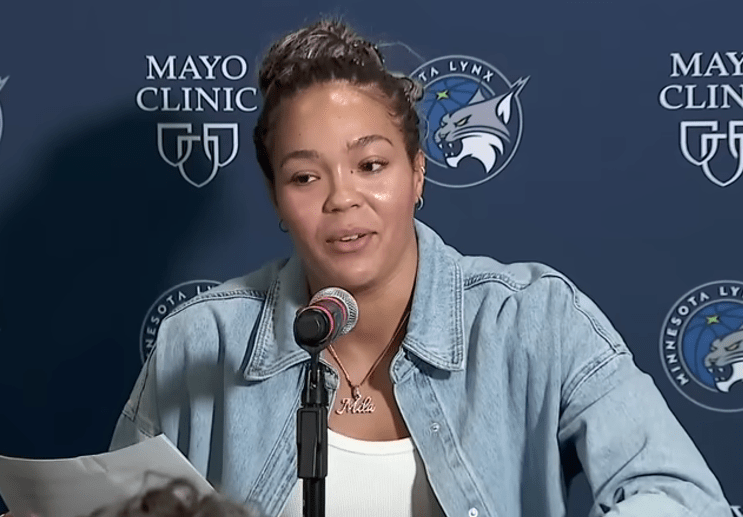
“The real threat to our league isn’t money. It isn’t ratings or even missed calls or physical play. It’s the lack of accountability from the league office.” Minnesota Lynx star Napheesa Collier used the spotlight in her exit interview to shine a light on the ugly truth behind the issues and logistics of the league.
The numbers tell the story, but the players add the color. According to Nielsen, the first game of the WNBA Finals averaged 1.9 million viewers – the most watched Game 1 in 28 years. The Finals between the Mercury and the Aces this year averaged 1.5 million viewers, trailing behind only the 2024 Finals. Regular WNBA games on ESPN averaged 1.3 million viewers, which is up 6% YoY.
With all of this growth, you would think the administration of the league would do everything in their power to keep this momentum of the WNBA sustainable. In fact, they have stability for years to come with the 11-year deal that was made in 2024 with Disney, ABC, ESPN, & NBC for $200 million dollars per year. Just last month, the WNBA signed another 11-year deal with USA Network to broadcast 50 games with additional playoff and finals covering beginning in 2026.
Part of the reason the players are so fed up, is because the structure of the WNBA is still tethered to a low-income, small market, misogynistic mentality that has been under servicing them for years. Roster spots for each team are extremely limited and max out at 12 players. Across those 12 players, each team has a salary cap of about $1.5 million dollars with a $1.2 million minimum spend. Players with 2 years of service or less earn on average $66,079. Players with 3 years or more make a minimum of $78,831. For example, Caitlin Clark in her rookie year made $76,535. This year that was increased to $78,066. The 4-year deal will top out for Clark at $97,582 in 2027.
“The amount of money that Caitlin Clark has made the league is insane, and she’s getting zero percent of it because we have no revenue share. She gets less than $80,000 a year, and she’s bringing in, like, hundreds of millions of dollars. It’s insane.” Collier, who is part of the CBA player negotiations, has been advocating for change within the WNBA structure for this very reason. Collier called out WNBA Commissioner Cathy Engelbert, sharing a conversation the two had when Engelbert said “Caitlin should be grateful she makes 16 million off the court, because without the platform that the WNBA gives her, she wouldn’t make anything.”
It is because of the WNBA’s rise in popularity, that players now finally have some leverage to restructure a system that has been run inefficiently for so long. Players and coaches alike have stood together on issues such as pay and officiating with a mutual understanding that everyone involved in the league has been undervalued for a very long time. Most notably, Cheryl Reeve was ejected, suspended, and fined $15,000 for her outburst and comments about the officiating during the semifinals this year. “If this is what the league wants, OK, but I want to call for a change of leadership at the league level when it comes to officiating,” Reeve said. “The officiating crew that we had tonight, for the leadership to deem those three people semifinal-playoff worthy, it’s f—ing malpractice.”
It was the play that Reeve was complaining about in the final minute of Game 3 that injured Collier with a missed call on Alyssa Thomas, ultimately ending her season with an ankle injury. Without Collier and Reeve, the Lynx fell to the Mercury in Game 4. Around the W, other coaches such as Stephanie White and Becky Hammon also spoke out to the media in support of Reeve and calling for a change in officiating. The league also fined each of them $1,000. Reeve’s fine is the largest in WNBA history. With the second largest fine being dealt to Diana Turasi for $2,500 for illegal contact with a referee.
The league has also been handing out fines for comments made on podcasts off the court, social media subtweets or comments, yet Engelbert said, “My focus remains on ensuring a bright future for the players and the WNBA, including collaborating on how we continue to elevate the game.”
Players seem to have little faith that the league will massively change the culture of “shut up and dribble” or take responsibility for the shortcomings that are holding the WNBA back. It is why veterans like Collier and Breanna Stewart have played overseas, but have also started to become inventive. The Unrivaled league is another asset in leverage that helps the players get out from underneath the squeeze of the W.
The average salary of an Unrivaled player last year was $220,000 with no player making less than six figures. Salaries are set to increase this year, even with adding 6 more players to the league. Alex Bazzell, Collier’s husband and the President of Unrivaled, said “The numbers are going up because the business outperformed every metric that we had,” Bazzell said. “It’s part of our business model that we built from the ground up, which is that as the business continues to drive more revenue, the revenue is going to get funneled back into the players.” Unrivaled is the blueprint that it is very possible to have a popular and profitable league that benefits everyone involved.
The WNBA has already offered a 30-day extension. The deadline for negotiations is set for October 31st unless there is an agreement or an extension. With things looking not so friendly between the WNBA and the Players Association currently, prepare for a lockout, but hope for the best. At least we’ll still have some Unrivaled basketball to watch. Come see for yourself on January 30th at Xfinity Mobile Arena and support (fair) women’s sports!


 Philly Plain Dealer
Leave a comment