
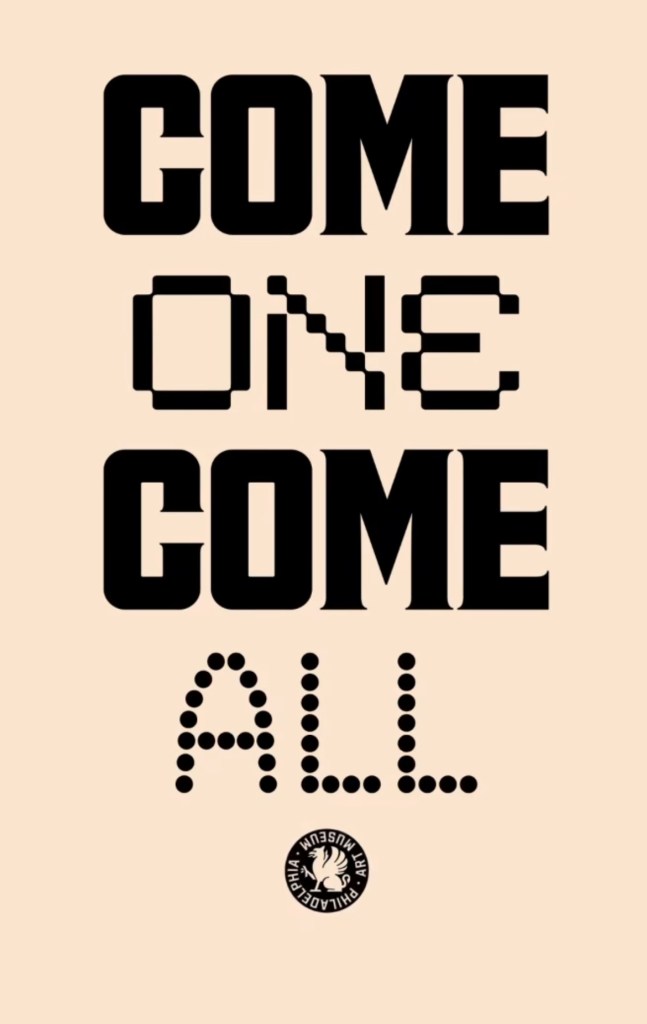
Philly is one of the last major cities left where the working class and its quintessential ‘grit’ reigns supreme. A surface level assessment may assert that, because of this, artistic subtlety and nuance go right over the heads of a general Philly audience—apparently we need gigantic bold font that reads “COME ALL” to compel us to schedule a visit to a museum.
Now known as ‘PhAM’, the art museum consistently seems to fall victim to public backlash. Mass attention toward the “castle on the hill” in recent memory has rarely been linked to excitement about an exhibition, and instead usually chalked up to: botched union negotiations, a wave of strikes during COVID, mass layoffs, resignations and reports of a hostile work environment, to name a few. These have left quite a stain on the museum’s reputation, and likely all have more of an effect on the declining attendance (from 773,511 in 2019 to 672,484 at the end of this fiscal year) than management would like to admit.

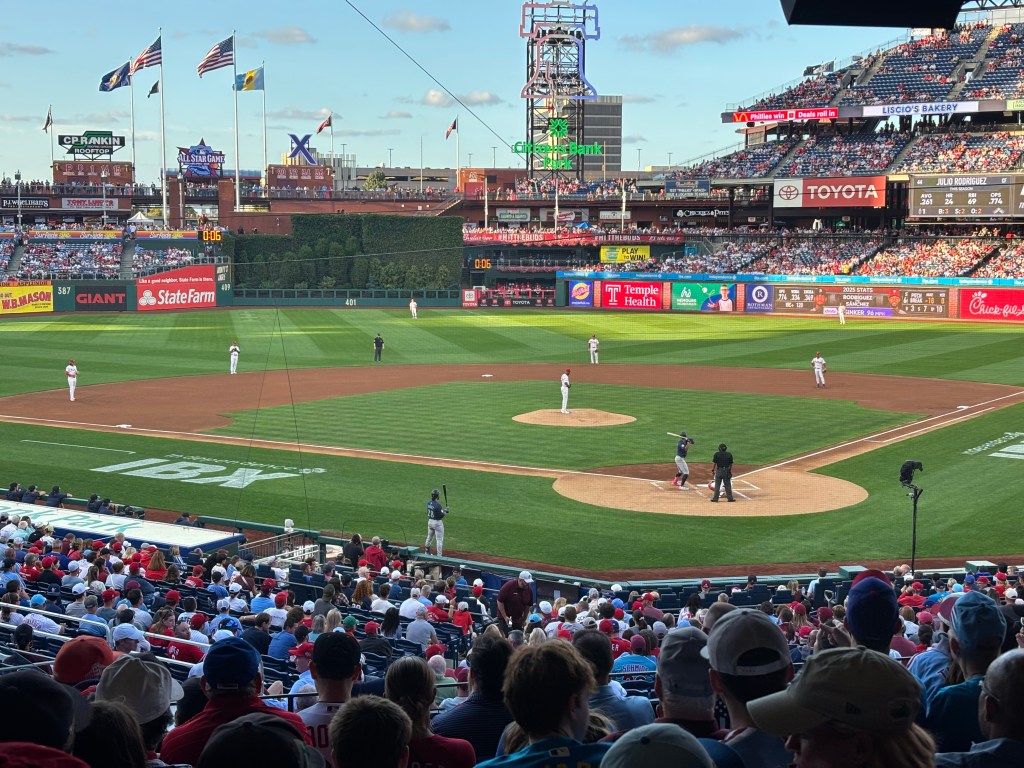
Clearly the aim of this rebrand is, more than anything, to align the museum with Philly’s dedication to sports culture. It seems a broad-strokes assessment by a (likely expensive) consulting firm deemed capital-S Sports to be the most influential cultural pull in the city, resulting in a strange branding lockup that reads more like a rugby team than an arts institution.
The new badge character ‘Griffy’ is uncomfortably close in name to the Flyers’ iconic Gritty mascot, which probably gained some fervent nods and “oooh, they’ll like that one”s in board room meetings. “REVOLUTIONARY SINCE 1867” sits heavy on the visitpham.com homepage. A focus on heritage combined with the stark black and white graphics throughout unfortunately leans closer to prewar fascist power symbols than a supposed newfound dedication to community.
The museum announced plans to open a Rocky Balboa/Sylvester Stallone exhibition next year in an attempt to generate a conversation with the—now two for some reason—Rocky statues outside. With Philly hosting the FIFA World Cup next summer, and a slew of events slated for the US semiquincentennial, tourist foot traffic in the city is expected to skyrocket in 2026. Management’s not-so-secret hope is to get as many people through the door as possible at the current $30 adult admission rate.
Much of the flack against the self-described ‘Philly centered’ rebrand is critiquing their decision to hire Gretel, a Brooklyn-based design firm, rather than going for local talent. There’s a general sense that the homegrown marketing language feels more like pandering than genuine sentiment, representative of an overarching hollow ethos: outside-in over inside-out.
The true strength of our museum is the impressively robust collection it houses, an overlooked source to pull from for design inspiration here—though this eversion tactic may only have gotten those of us already artistically curious and inclined through the door. A closer look within would reveal potential internal changes capable of naturally radiating outward into the city: making admission prices more affordable for Philly residents, a more supportive workplace culture, reinstating their internship program for recent grads (on hold since 2022), and bolstering collaborative external programming with Philly’s plethora of smaller-but-mighty community-driven arts spaces.
Museums both nationally and internationally have had to grapple with the question of their waning relevance for the last several years. One common and relatively simple solution is investing money into indoor or outdoor gathering spaces, free-to-enter forward facing cafés and gardens to relax in or work remotely. Philly’s art museum boasts several gorgeous cafés and lounges inside, but at an entry price far too steep for, say, the hundreds of runners who pass by the building every week, to just pop in for a drink and a seat—and then maybe be surprised enough by what they see to stay a bit longer.
There is an overabundance of places in the city, big and small, to be dizzied by the thrill of competition—there are far less places where, after you leave, you can begin to see things a bit more clearly.

 Philly Plain Dealer
Leave a comment