Baseball is perhaps one of the most rigorously documented facets of American history. You can Google stats dating back more than 100 years on whether or not a player made it to base safely in a meaningless regular season game in 1910. With confidence, it can be stated that Babe Ruth hit 34 home runs the same year that Adolf Hitler came to power in 1933.
Yet much of the Black history of baseball is still difficult to find and learn about. The DePace Sports Museum of Champions located in Sewell, NJ – not far from Philadelphia is home to a vast array of throwback Philly sports history, there are whole exhibits dedicated to the Frankford Yellow Jackets, the Pottsville Maroons, the Philadelphia Athletics, and even the Philadelphia Stars Negro League team.
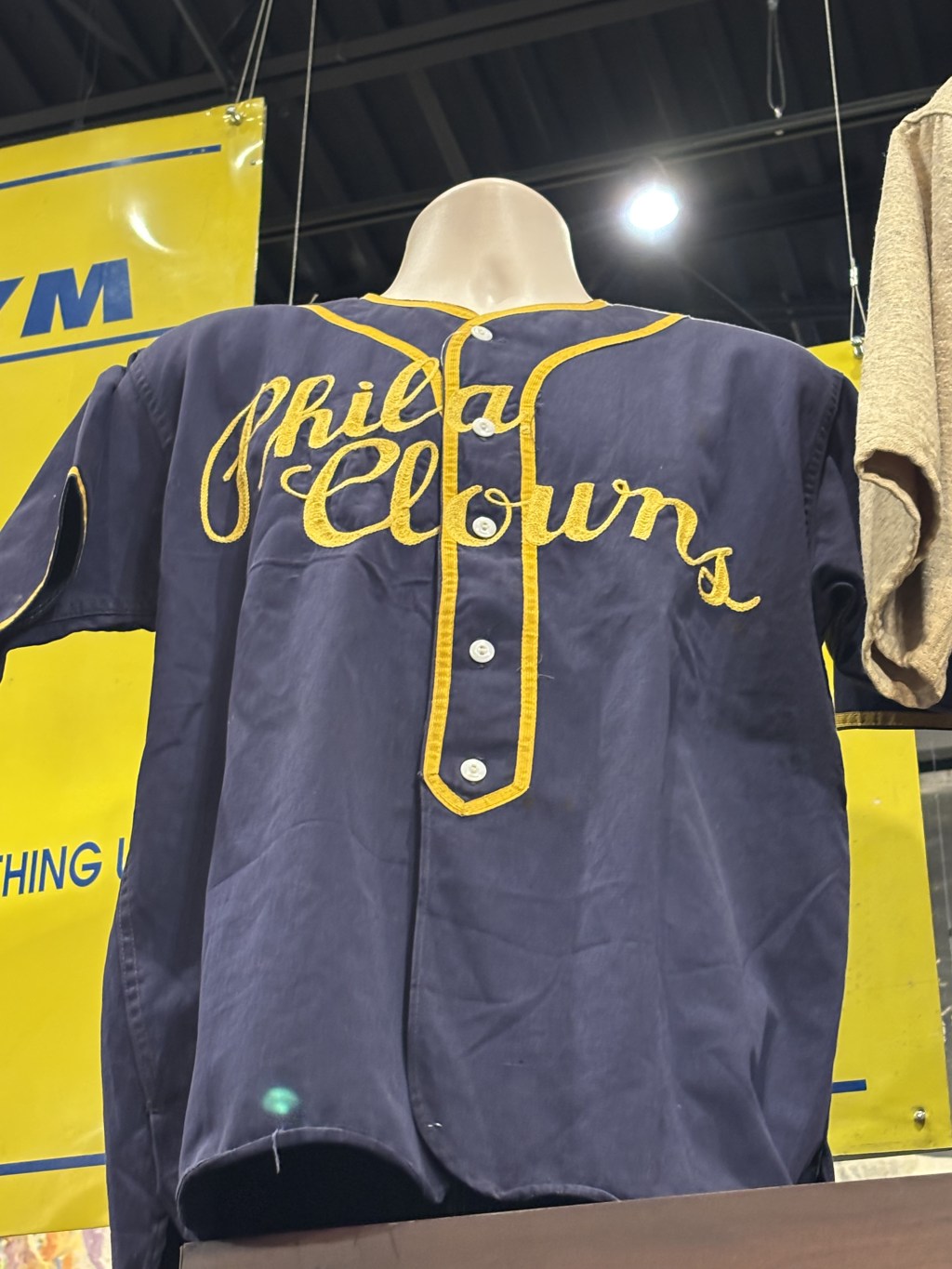
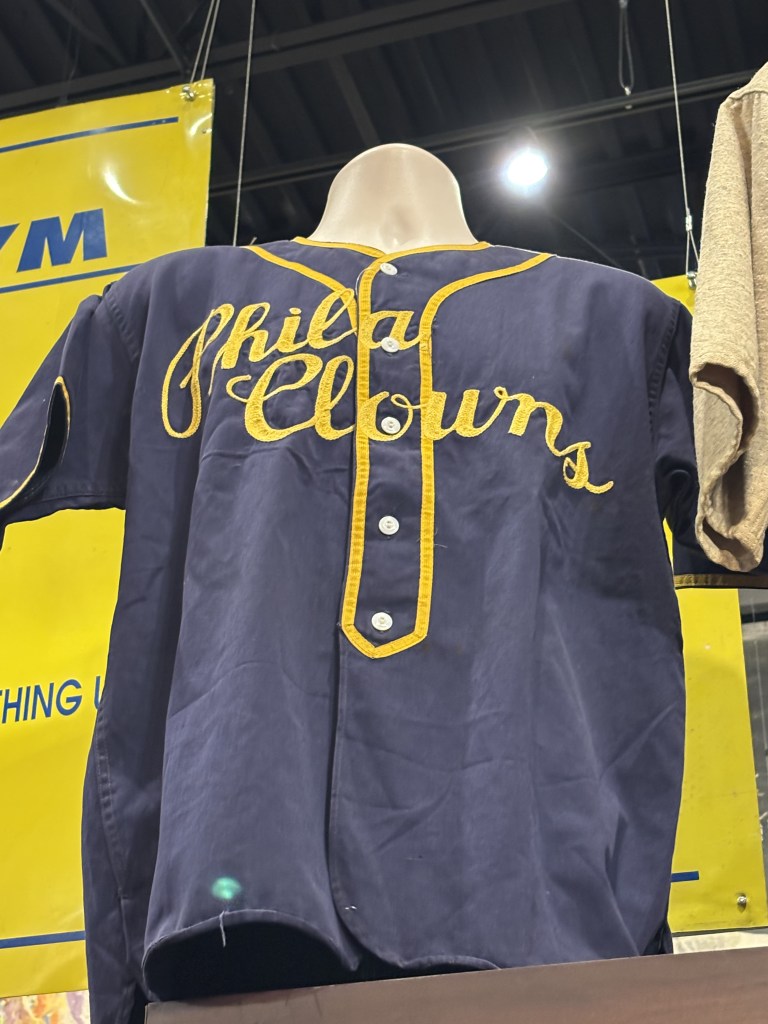
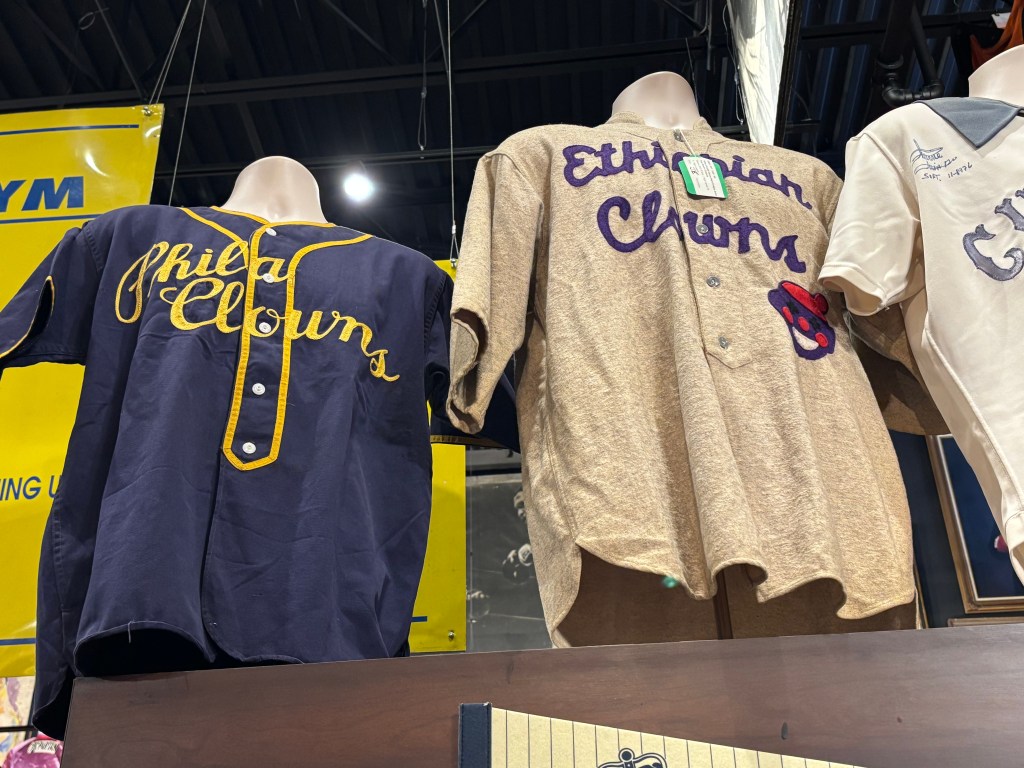
However, inside the DePace Sports Museum which is a massive collection of sports history hung a navy blue and yellow baseball jersey with little to no explanation that read “Phila Clowns.” Next to the Phila Clowns jersey was an “Ethiopian Clowns” and a “Clowns” jersey, then on the wall was a sign for the Indianapolis Clowns vs. the New York Stars. The sign reads “Combined Baseball and Comedy Show – bring the family” with an illustration of a clown that is similar to minstrel show imagery.

Information about the Ethiopian Clowns and the Indianapolis Clowns was easy to come by, they had players with cartoonish and racially motivated nicknames like “Wahoo, King Tut, and Tarzan.” According to the Society of American Baseball Research “Obscured by these vivid names and the vaudevillian antics that went with them is the fact that these entertainers also played first-rate baseball—as evidenced by the team’s many Negro American League and semi-pro tournament titles—and did so for longer than any other Negro League team. Taking the Clowns throughout the country on a barnstorming schedule packed with as many as 200 games per year.”
But what exactly is the blue and yellow Phila Clowns jersey?
By the mid-1940’s the Clowns had received praise for being “the Harlem Globetrotters of Baseball” akin to what the modern Savannah Bananas are doing in 2025. However after Jackie Robinson broke the color barrier in 1947, the days of Negro League Baseball were numbered. The antics and theatrics of the “Clowns” franchise kept the team alive longer than it’s counterparts, according to the Baseball Hall of Fame “the Negro National League had folded in 1948, and by 1953 the Clowns were one of only four teams left in the Negro American League.”
In the post-integration era of the Negro League team owners saw the writing on the wall for their teams. “The golden era has passed,” Birmingham Black Barons owner Tom Hayes declared, according to Society of American Baseball Research “teams that are to survive must retrench and proceed with caution.”
According to an archived story by the Cleveland Call & Post, that’s exactly what the Clowns did “as more black stars left the Negro Leagues, team executives like Clowns owner Syd Pollock looked for ways to keep fans coming to the ballpark.” The Clowns stood out due to an integration of their own, they began to sign women to their baseball team. First came Mamie “Peanut” Johnson and Toni Stone, then in 1954 came the signing of 19-year old Connie Morgan. “The athletic Morgan had already played five seasons with the women’s North Philadelphia Honey Drippers from her hometown (batting .338 over that period) and basketball for the Rockettes,” says the Baseball Hall of Fame.
All of that being said, we do not definitively know who the Philadelphia Clowns are. There is no written record of the Philadelphia Clowns franchise, nor any pictures depicting this “Phila Clowns” jersey to corroborate their existence.
After researching the matter, here are three educated guesses about who the Philadelphia Clowns were.
Google’s wonky Artificial Intelligence seems to think “The Philadelphia Clowns, though not a specific Philadelphia-based team, were a group of baseball players known for their comedic and entertaining antics. Their performances and personalities became a significant part of the baseball landscape, especially through figures like Max Patkin.” Max Patkin lived in Philadelphia and was dubbed “The Clown Prince of Baseball.” This educated guess is fair, because of the Philly reference and the clown reference, however Google had no answers on the Philadelphia Clowns existence, nor was the “Phila Clowns” recognized by Google’s Image Search,
A second educated guess would be that the “Phila Clowns” jersey is some sort of fan made jersey, gift or replica that somehow ended up in Dr. DePace’s Museum of Champions without the team ever having existed.
A third and final educated guess would be that in Connie Morgan’s hometown debut for the Clowns, they dawned special jerseys that read “Phila Clowns.” According to the Philadelphia Inquirer “In Morgan’s first appearance with the Clowns in her hometown of Philadelphia, she took on the Kansas City Monarchs in front of several of her old friends from business school. The Clowns swept the doubleheader at Connie Mack Stadium.” If the Kansas City Monarchs hail from Kansas City and the Indianapolis Clowns are from Indy, who’s the home team at Connie Mack Stadium? Perhaps for one doubleheader in 1954… The Philadelphia Clowns were.
We hope that this is not the end of the Philadelphia Clowns discussion, but rather the beginning and that soon we will know exactly who the “Phila Clowns” are.
 Philly Plain Dealer
Leave a comment