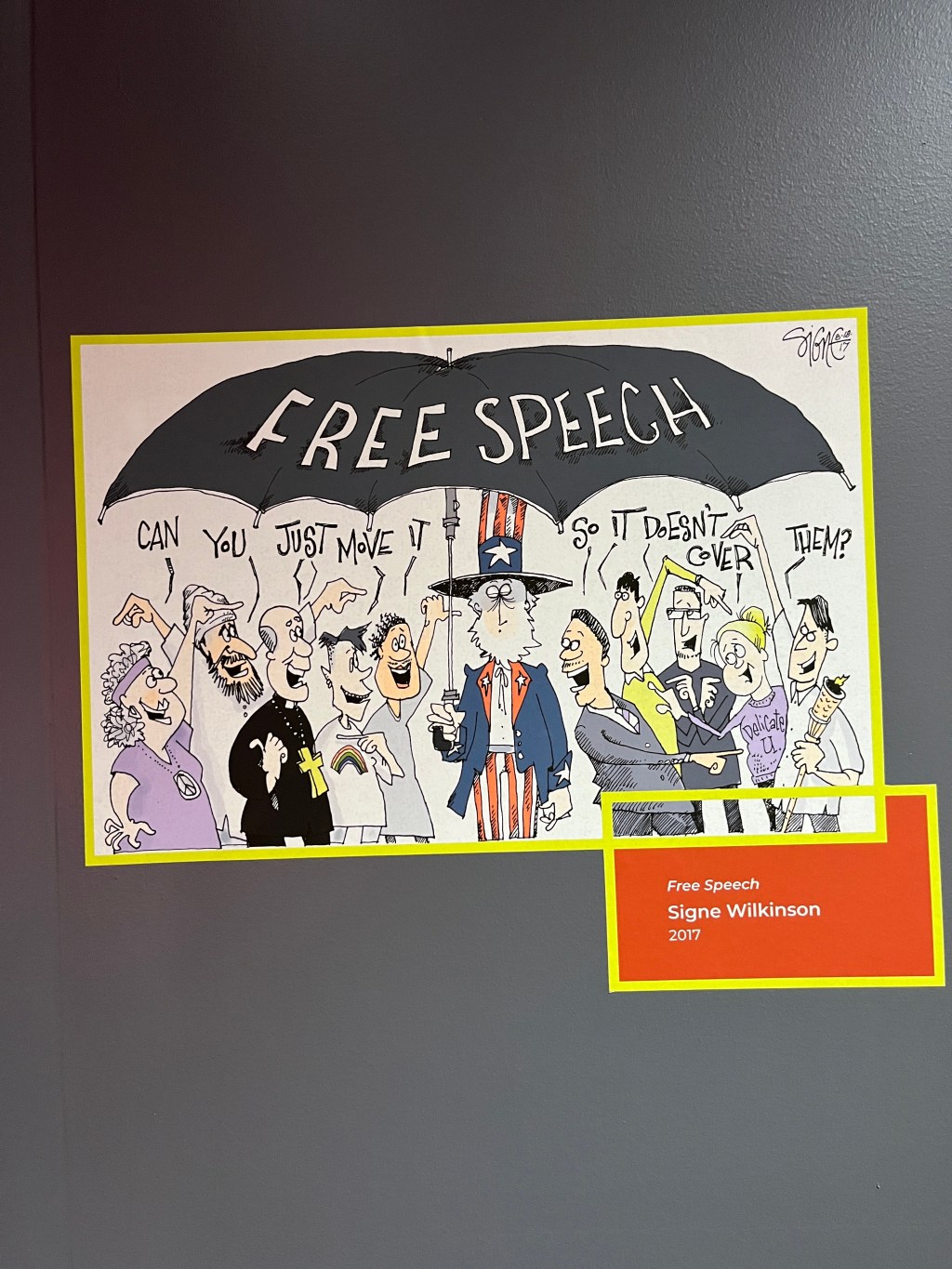
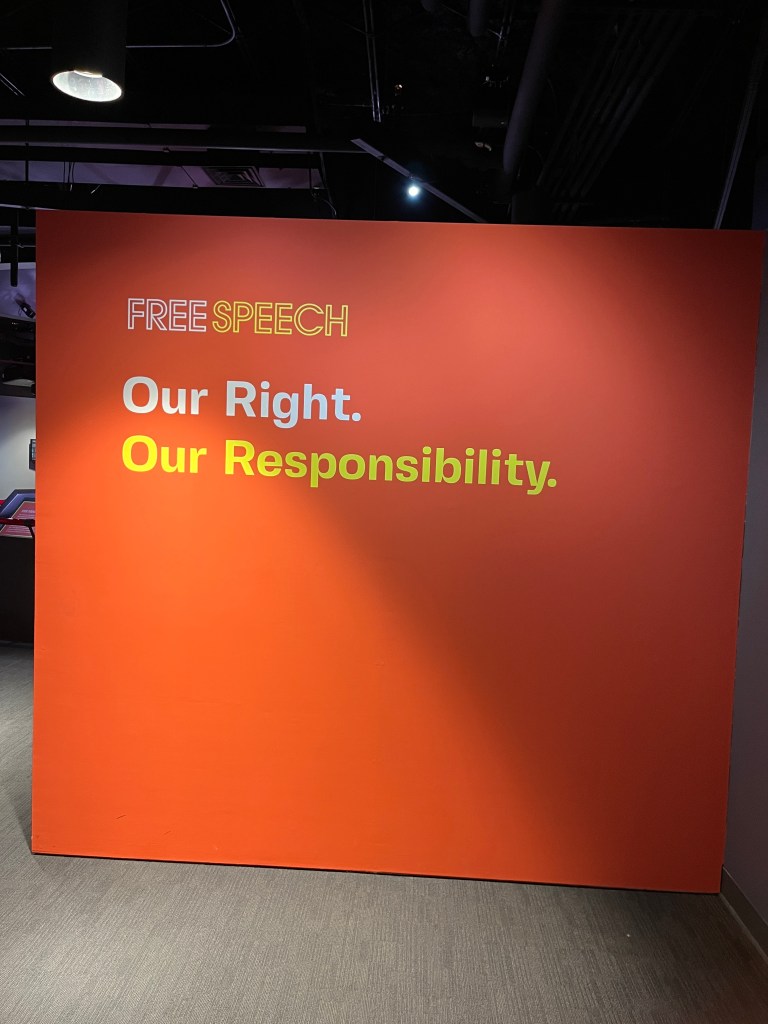
After visiting the “Free Speech: Our Right, Our Responsibility” exhibit at the Liberty Museum in Philadelphia, I learned so much about the history of free speech, as well as ways to exercise that right. The exhibit itself is informative, lacking political bias. It provides an interactive way to learn about our rights, book bans and censorship, as well as additional resources to learn more. I would highly recommend visiting this exhibit in person before its closure on July 28th.
I learned a lot from this three-tier exhibit, and it inspired me to write this piece. As a writer, I specifically wanted to touch on the popular, political discourse of book bans, as it is a small, but significant addition to the exhibit.
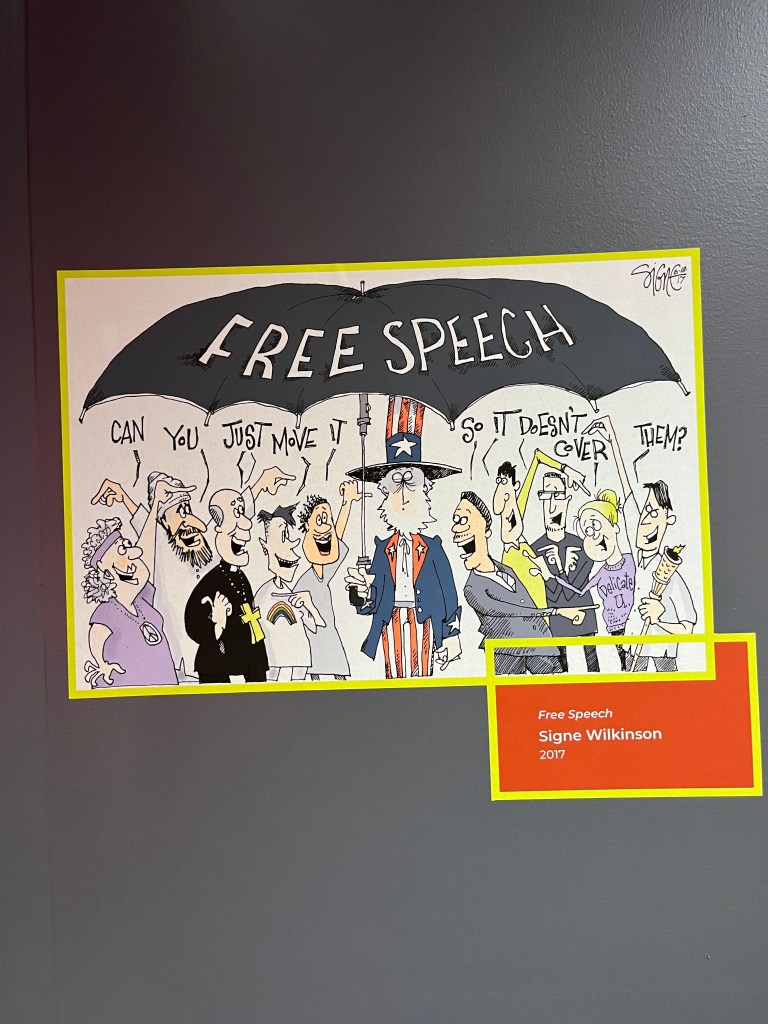
“Free Speech” means without government interference or legal repercussions. In these types of discussions, the word “speech” applies to anything that is said, written, or even posted on social media. According to the exhibit, we are allowed to say whatever we want, as long as there is no threat or “immediate danger.” According to the documentary Free to Speak: Thought Police, “There is a difference between what we can do and what we should do.”
While hate speech is legally protected in the United States, it is criminalized in other countries like Germany, which is said to be a response to the aftermath of the atrocities of World War II.

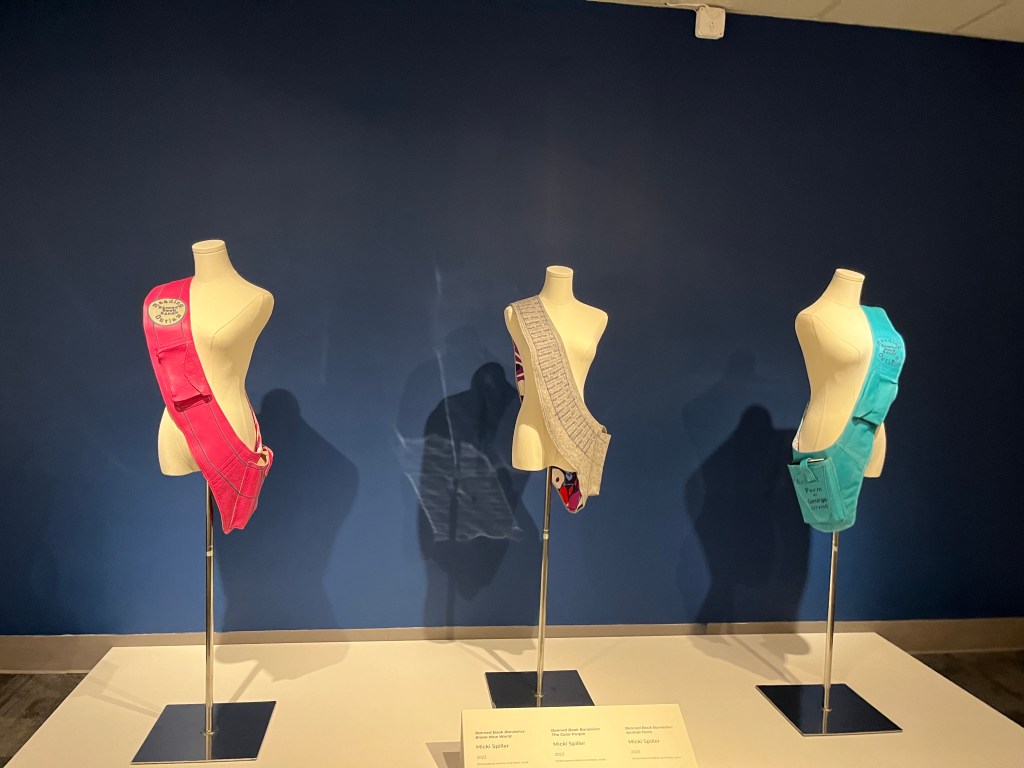
The Nazi regime made a show of burning and banning books. This form of censorship had a profound impact on the way that people were able to access literature. This brings me to the topic of “Obscenity”, which was and still is a common justification for the banning of books.
If something is “obscene” it is an extremely offensive word or expression. Interpretations of this word are subjective, because what may be obscene to one person can be the norm to others.
There is no set, concrete basis in which we can measure obscenity. However, many people have tried to, especially when it comes to written speech. An example of this would be the attempted banning of the Harry Potter books in some states. Some believe those books to be offensive because of the presence of witchcraft, while others are offended by the author’s hostility towards the transgender community. Either way, those are two, totally different definitions of what makes the book obscene.
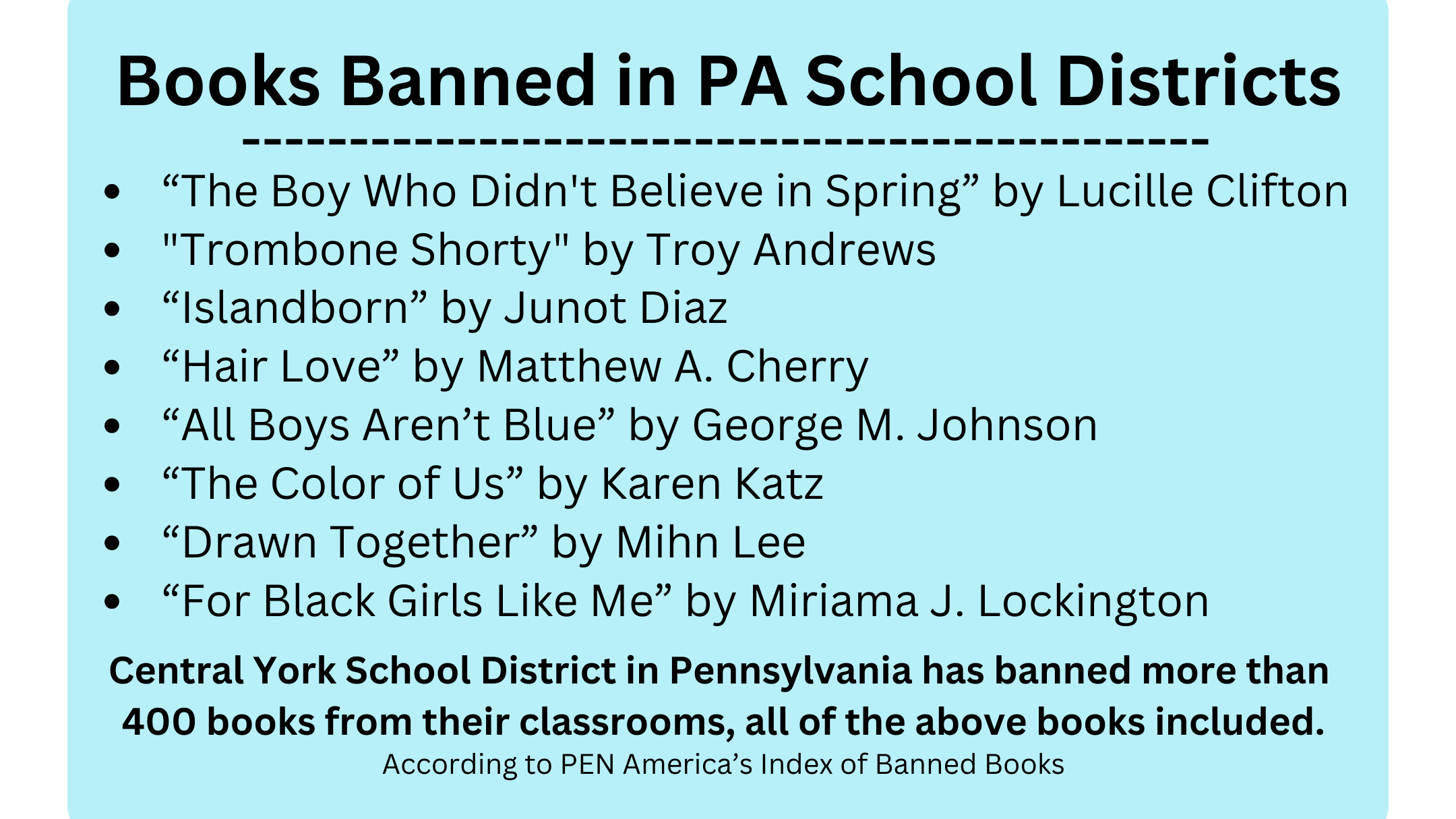
Literature has a history of being persuasive and inspirational, while also providing different perspectives. In a world where there is an empathy deficiency, seeing other perspectives and experiences is essential to understanding our space and privileges in the world. Attempting to silence authors, especially people from minority groups (which seem to be a large portion of the attempted banned authors), only worsens our ability to empathize.
While learning more about book bans, there were two questions that arose: While we have the right to speak, do we not have the right to be heard? Shouldn’t we have a right to read, see, and listen to other’s expressions of their free speech?
My answer to those questions: words have power. What we say matters, and what we hear matters, whether it is the purest form of expression or unfathomable hate speech. We are able to be affected by words every day-in the news or on our phones. Because of our accessibility, we should encourage each other to challenge hate speech with passionate discourse and counterspeech, no matter how protected it is.
We need to write about our experiences, and read about those whose lives differ from ours. Empathy is born from reading.
“Art and liberty are both essential to a free society,” says a plaque in the Liberty Museum.
 Philly Plain Dealer
Leave a comment