
It isn’t news to anyone that there are some restaurant patrons that tip as if we can still buy a house for $10,000 and the milkman comes to our doors. A portion of other patrons tip generously, sometimes far more than the standard (and yes, it’s standard) 20%. As even the non-service industry worker can imagine, these discrepancies can make or break a shift for a server or bartender. Pooling tips, or dividing them amongst staff members, is a way that restaurant managers have tried to lessen differences in pay among staff. But do employees think tip pooling is a good thing? The opinions vary.
A potential benefit of pooling tips is that ideally, it builds camaraderie and teamwork. Think of it this way: if a few servers or bartenders average over 20% in tips, the whole staff makes more money. One would expect staff members to work harder to give exceptional service to guests, thus contributing more to the tip pool. However, this result depends on the individual.
Andy Butler, a server who works in a pooled tip system at a private social club. “I feel like it pulls people together and builds team ethics, but some of the cons are that some people won’t work as hard, they can feel like they will still benefit off of other people’s hard work either way.” He also noted that there is a point system in place where bartenders, servers, and food runners each make different ratios of tips within the pool.
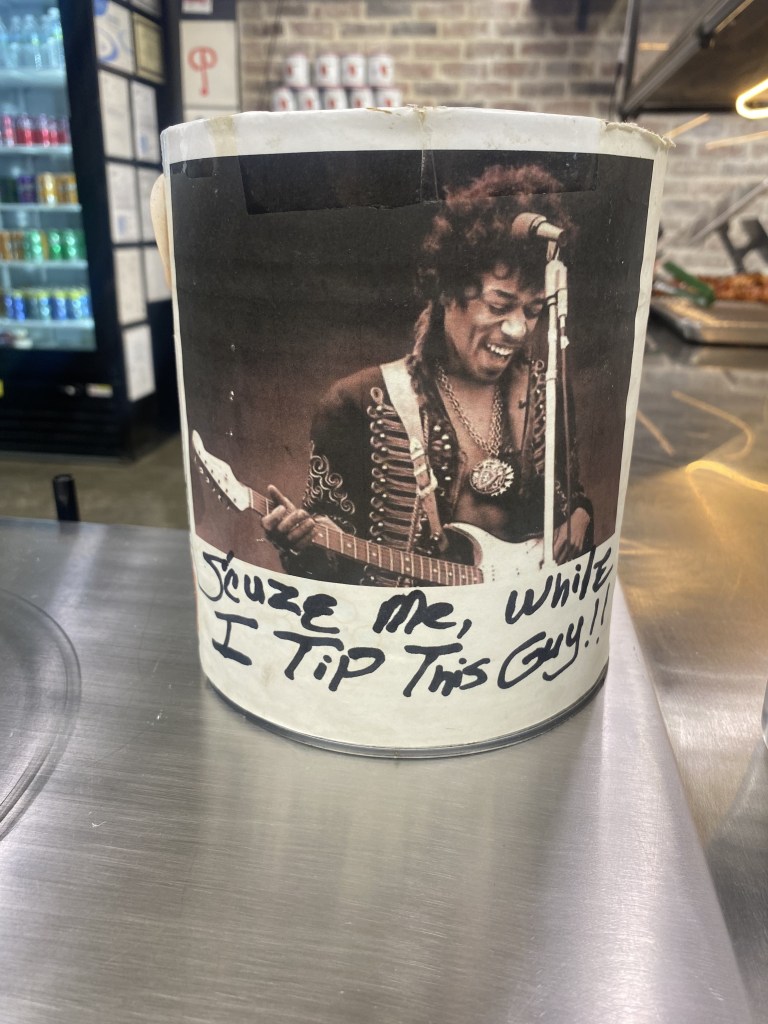
“I still have no idea how the point system works. Bartenders make 15 points, servers get 12, I don’t know. I just know I get paid. But I worked a full buyout where everyone got paid the same, and it didn’t show up on my paycheck.” This brings up a huge issue that a multitude of wait staff have with the system; if managers are in charge of distributing tips, how can staff feel confident they can trust the system and ensure there are no human errors? After all, this is workers’ livelihoods we are talking about.
A barista turned server, Nicole Passalaqua, mentioned that when she worked at Starbucks many years ago, the tips would be divided evenly based on hours employees worked. There would also be a few sets of eyes on the distribution of tips. “When we did cash tips, we had a separate safe we kept it in and it got done weekly. The managers didn’t touch it. It required two keys to open. One held by an hourly supervisor and whoever the most trusted barista was…always agreed upon by everyone in the pool. Everything was counted and written down in a log book, and initiated off.”
Service industry workers, both in the front and back of house, are undoubtedly an essential element of the backbone of the working class in America. In Philly, industry folks share a special bond both on and off the clock. They have their own clubs, they drink Fernet and Miller High Life, and collectively, they are each other’s biggest fans and best regulars. Building trust within the workplace is a huge step to making a bar or restaurant great. Seemingly, as long as trust can exist between employees and managers, greatness will come with ease.
Tip pooling can be a lengthy process that often takes up much of a managers time, however it’s important to know that the US Department of Labor states: “When an employer collects tips to administer a tip pool, the employer must fully distribute any collected tips at the regular payday for the workweek, or, for pay periods of more than one workweek, at the regular payday for the period in which the particular workweek ends.”
If you are a service industry worker looking to understand the laws around Tip Pooling, read the United States Department of Labor’s fact sheet on Tipped Employees Under the Fair Labor Standards Act.



 Philly Plain Dealer
Leave a comment