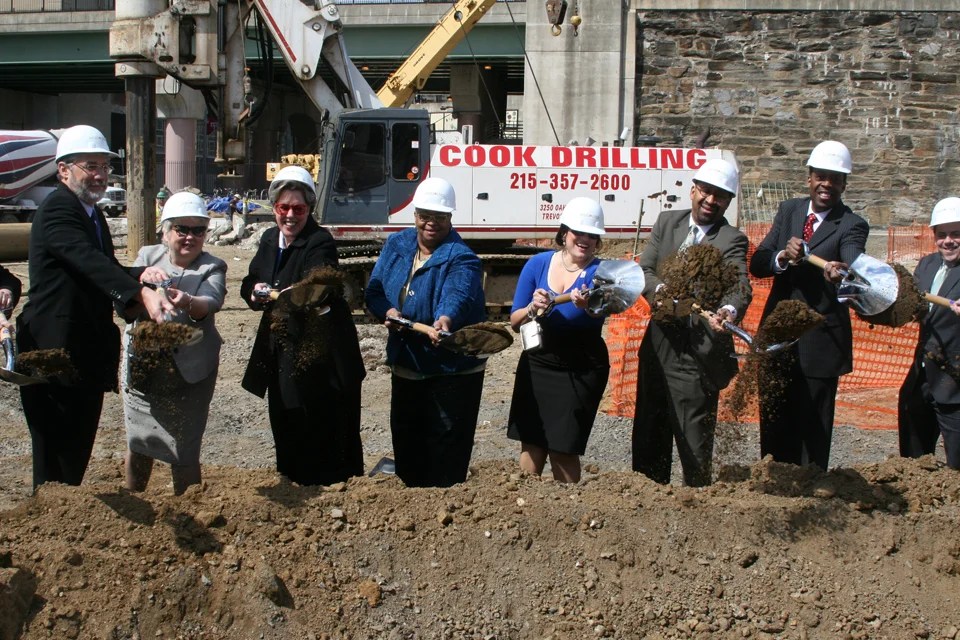
Philadelphia is one of the most diverse major cities in the U.S., but it’s one whose historical factors, policies and income disparities contribute to a great community divide in the city today.
Community Development Corporations (CDC’s) are working to make progress to advance equitable housing in many ways. Such as homeownership, repairs and creating rentals for longtime community residents. But for these entities to have significant effect in the face of growing a city with greater needs, more investment and strategic purpose will be needed to overcome the historical and systemic factors that have been put in place.
“Philadelphia is facing a great housing challenge that cuts across race and class but with particular implications for the city’s Black, Latinx, and low-income Asian and Pacific Islander residents.” Policy link
The Challenges: Past Inequities Showing Up in the Present
Economic insecurity and discriminatory housing practices are factors that have played a critical part in creating inequity to housing for people of color in Philadelphia. According to U.S. census data, the city has one of the highest poverty rates of the major US cities. Income disparities, and a history of racially discriminatory institutional practices within banking and real estate institutions created undervalued and segregated neighborhoods throughout the city.
As we know, the effects of these discriminatory practices are playing out in today’s housing market. But despite this, Philadelphia has one the largest populations of homeownership by people of color in a major metropolitan city, ranking 8th in the nation of major metropolitan cities with the highest minority ownership rates according to data from the 2019 American Communities Survey Data (ACS) . Additionally, Philadelphia also has some of the oldest housing stock in the nation. Unfortunately with many of the homes in need of major repair and rehabilitation.
The situation renters’ face is at a critical point as well. In a report by PEW 40% of Philadelphians faced a cost burden in 2018. Cost burden, is a US Department of Urban Development (HUD) created metric that means that individuals and families spend more than 30% of their income on housing costs — rent, mortgage payments, utilities and property taxes. Half of the cost-burdened are considered severely impacted because of their housing-related costs. Philadelphia Local Initiatives Support Corporation (LISC) estimates the city needs about more than 70,000 more affordable rental units to meet demand.
CDCs Meeting Challenges with Opportunities:
CDCs born out of the social and civil rights movement’s goals to fight discriminatory barriers to equity and economic mobility are working to live up to these challenges in ways that are immediate and new but also rooted in well-established practice but focused on building lasting equitable development. In Philadelphia this has led to a range of innovative programs and affordable housing resources that are attracting replication in other cities and new investment thanks to local, state and federal stimulus support.
Initiatives such as the court and city administration-led foreclosure and eviction prevention mitigation programs, and a robust network of housing counseling and utilities assistance centers, often housed within CDCs, serve as critical immediate access points for affordable housing needs. In establishing longer-term lasting equitable housing access, CDCs and CDC like agencies have led the effort to expand homeownership, advance housing repair programs, and develop new rental housing markets . These efforts are part of a complex and rich mosaic of resources that are making a difference in the lives of thousands of individuals and families.
Homeownership:
Organizations such as Asociacion Puertorriquenos en Marcha (APM), HACE CDC, Community Ventures, and Impact Services, for example, are working with community residents to expand and build on the American dream of homeownership having collectively built new housing developments across the city of new single family housing in communities where private developers would not venture. “Our Housing Choice program in the late 90s allowed us to build a high quality home, provide a deep subsidy and now almost 30 years later that homeowner of color has significant equity and value. It would be hard to replicate that now in the current funding environment, but with more support from private and public resources, we know it can be done, because we did it,” said Rose Gray, Senior VP at APM.
HACE CDC, in its work in the Fairhill section of the city completed the first new housing in the area in over two decades and has plans on creating more opportunities for people of color through its community land trust work and a pipeline of new housing development. “It’s critical that we at HACE work to sustain the community by ensuring that homeownership is available for the diverse people of the community. For us that means supporting both existing homeowners and developing first time homeownership opportunities for those interested and able to do so,” said Maria Gonzalez, Executive Director of HACE.
Repair and rehab:
The community development sector is beginning to understand that homeownership for communities of color has limitations on wealth building. These limitations are tied to inequitable practices across appraisals, loan and insurance costs in addition to low income and initial poor quality of housing. But despite all of these obstacles, the most affordable home one can have is the home you already live in.
Rebuilding Together, Habitat for Humanity and Nicetown CDC are three organizations who are leading efforts in their work to advance housing repair and rehab in targeted neighborhoods throughout the city. Rebuilding has served 1,800 homeowners with rehab support. Homeowners such as community advocate Alberta Green. “My home is a symbol of my independence and freedom,” said Ms. Green, a recipient of Rebuilding Together housing rehabilitation. “Working to support people like Ms.Green, a long-time leader in the community to be able to stay in her home in comfort and dignity is what keeps us at this work and makes it so personal,” said Stefanie Seldin, Rebuilding Together’s Executive Director
Habitat for Humanity is completing a five year restoration program targeting more than 250 homeowners across the city. Nicetown CDC was one of the first CDCs in the city to launch a successful Targeted Housing Repair program providing much needed repairs and upgrades to long-time homeowners, many elderly, to maintain the equity and value of their homes. “Our work is making an important but small difference for Nicetown so that people can stay and enjoy their investment and stay connected to their neighbors,” said Majeedah Rashid, Nicetown’s COO.
Rental housing:
“CDCs typically work in communities where there is substantial disinvestment and poverty. There is no or very limited market rate development,” says Rick Sauer, PACDC Executive Director. He continued by stating, ” These organizations, working with neighborhood residents, develop strategies to work to change that. It takes time and resources, but some of the results are having an impact in communities in a real way,” Said Sauer. Organizations such as People’s Emergency Center CDC, Women’s Revitalization Project, New Kensington CDC work to create neighborhoods of opportunity using a range of strategies and as a result of their work, communities–primarily communities of color–are accessing high quality, affordable rental housing. This housing is often the only new affordable housing in a targeted community in many neighborhoods throughout the city.
Looking Forward
The future of community wellness, community revitalization and community resilience depends heavily on the resources at hand. Local CDCs in Philadelphia can and will have a major part in community success going forward. Community development empowers community members, creates local employment opportunities, and strengthens and diversifies the community.
For people of color, specifically for Black and Brown communities, CDC’s will have to continue engaging and educating residents on rental practices and effective homeownership, in order to prevent evictions and to assist in preserving affordable housing.
In partnership with municipal governments, organizations can move to get legislation or policies passed to keep lower income individuals exempt from evictions and practice rent control.
The hope is that with the growing work in CDC’s and community organizations, the municipal government and its resources can collaborate with Philadelphia’s CDCs and Non-profit developers to expand and preserve affordable housing opportunities for people of color and individuals of lower income in Philadelphia.

 Philly Plain Dealer
Leave a comment